Lawrence Lessig Quotes
That free culture was carried to America; that was our birth — 1790. We established a regime that left creativity unregulated. Now it was unregulated because copyright law only covered "printing." Copyright law did not control derivative work. And copyright law granted this protection for the limited time of 14 years.
Lawrence Lessig, Founder of Stanford University Center for Internet and Society, Keynote address at the Open Source Convention, July 24, 2002
Sourced by: Eigen's Political and Historical Quotations


In America it used to be 26 years with a renewal for an additional 26 years. However, Mickey Mouse was about to go into the Public Domain, and Walt Disney and other large copyright holders lobbied to extend the copyright term to the life of the author plus 100 years. See {624751}.


Stallman and others opposed copywriting of software and felt that computer programs were ideas and as such should not be able to be legally monopolized but they had to live with the law as it was. They started the open source software movement where many programmers developed software and made it freely available to the world. However, there were many companies who would take the free software which was very good, package it with their own brand and sell it. Stallman then created the copyleft concept. This meant that the open source programmers legally copyrighted the program and then created a license that anyone could have for free. But the license only gave them the right to use the software or give it freely to others. Charging money would be a copyright violation. So he and many others since used the copyright law to prevent others from interfering with or making money from distribution and Stallman named it “copyleft” meaning the other side of copyright. Thousands of major programs have been distributed this way. In some areas. It has been so successful that the free software became much more widely used than the products of Microsoft, Oracle or any of the other commercial software developers. Website development has become an example. Not only do many use it because the price is right but much of the open source free software is the best of breed. The Obama White House used a copyleft, free program for the White House website, not because they would save money—the Clinton White House had already licensed excellent commercial software. They chose the open source Drupal package because they thought it was the best available at any price.


In early America, the United States did NOT participate in the European International Copyright convention. The American purpose of copyright was not to protect authors and intellectual property owners, but to promote knowledge and culture. The original purpose was to limit the time during with an author could control his/her creative work so that the society as a whole can get maximum benefit. With the rise of large corporate intellectual property owners with strong lobbyists, they have been able to change the copyright law to greatly enlarge their time and methods of control. The Pirate Party wants to go back to the original intention of the Founding Fathers.


Guthrie was one of the many people who used the copyright law to prevent someone else from restricting the information and allowing wide utilization of their proprietary material. This is sometimes called “copyleft.” This quotation collection is another example of copyrighted material with broad encouragement of utilization.

Note that the only reason given in the constitution for protecting intellectual property was to promote the progress of science and useful arts. Inventors, would keep secret their inventions and techniques of manufacture and use in order to protect their economic interests. No one else would be able to benefit by understanding the invention and taking it further and increasing knowledge and understanding. So the Founding Fathers told Congress to establish a system where inventors would get a guarantee of a reasonable time to profit exclusively from the invention in exchange for making the invention public. The plans, methods and drawings had to be made public and until the 20th century a model of an invention had to be supplied to the Patent Office. Anyone could get an inexpensive copy of any patent and come and study the models. Today, most people believe that the reason for a patent system is to protect the intellectual property of the inventor, but that was not a purpose or even a serious consideration. The reason however was educational and to demystify technology and produce more science and technology which it did.


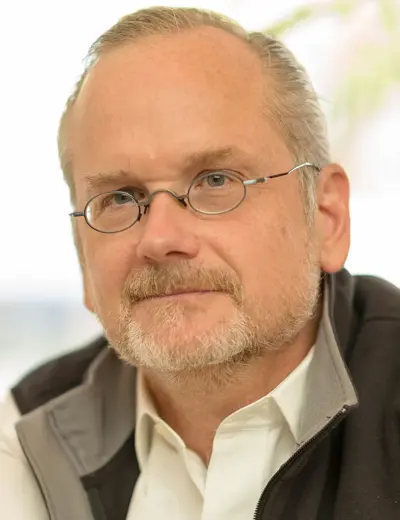
Lester Lawrence Lessig III is an American academic, attorney, and political activist. He is the Roy L. Furman Professor of Law at Harvard Law School and the former director of the Edmond J. Safra Center for Ethics at Harvard University. Lessig was a candidate for the Democratic Party's nomination for president of the United States in the 2016 U.S. presidential election, but withdrew before the primaries.
