Lawrence Lessig Quotes
We live in a world with "free" content, and this freedom is not an imperfection. We listen to the radio without paying for the songs we hear; we hear friends humming tunes that they have not licensed. We tell jokes that reference movie plots without the permission of the directors. We read our children books, borrowed from a library, without paying the original copyright holder for the performance rights.
Lawrence Lessig, Founder of Stanford University Center for Internet and Society, Founder and chairman of the Creative Commons, Arguing for greater freedom from copyright and other intellectual property restrictions, May the Source Be With You, 2001
Sourced by: Eigen's Political and Historical Quotations


Note that the only reason given in the constitution for protecting intellectual property was to promote the progress of science and useful arts. Inventors, would keep secret their inventions and techniques of manufacture and use in order to protect their economic interests. No one else would be able to benefit by understanding the invention and taking it further and increasing knowledge and understanding. So the Founding Fathers told Congress to establish a system where inventors would get a guarantee of a reasonable time to profit exclusively from the invention in exchange for making the invention public. The plans, methods and drawings had to be made public and until the 20th century a model of an invention had to be supplied to the Patent Office. Anyone could get an inexpensive copy of any patent and come and study the models. Today, most people believe that the reason for a patent system is to protect the intellectual property of the inventor, but that was not a purpose or even a serious consideration. The reason however was educational and to demystify technology and produce more science and technology which it did.

Guthrie was one of the many people who used the copyright law to prevent someone else from restricting the information and allowing wide utilization of their proprietary material. This is sometimes called “copyleft.” This quotation collection is another example of copyrighted material with broad encouragement of utilization.


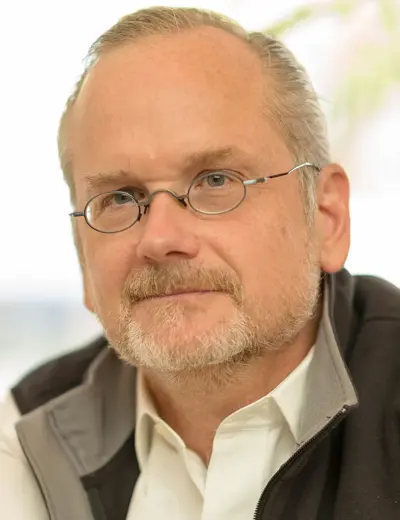
Lester Lawrence Lessig III is an American academic, attorney, and political activist. He is the Roy L. Furman Professor of Law at Harvard Law School and the former director of the Edmond J. Safra Center for Ethics at Harvard University. Lessig was a candidate for the Democratic Party's nomination for president of the United States in the 2016 U.S. presidential election, but withdrew before the primaries.
