William F. Patry Quotes
Creativity in copyright law only means that you didn’t copy it from someone else …. Most works that are protected under copyright are not creative in the colloquial sense of the word.
William F. Patry, Copyright Scholar and Expert, Copyright Counsel to the U.S. House of Representatives, Interview, C-SPAN, Book TV, February 22, 2012
Sourced by: Eigen's Political and Historical Quotations


Note that the only reason given in the constitution for protecting intellectual property was to promote the progress of science and useful arts. Inventors, would keep secret their inventions and techniques of manufacture and use in order to protect their economic interests. No one else would be able to benefit by understanding the invention and taking it further and increasing knowledge and understanding. So the Founding Fathers told Congress to establish a system where inventors would get a guarantee of a reasonable time to profit exclusively from the invention in exchange for making the invention public. The plans, methods and drawings had to be made public and until the 20th century a model of an invention had to be supplied to the Patent Office. Anyone could get an inexpensive copy of any patent and come and study the models. Today, most people believe that the reason for a patent system is to protect the intellectual property of the inventor, but that was not a purpose or even a serious consideration. The reason however was educational and to demystify technology and produce more science and technology which it did.


In America it used to be 26 years with a renewal for an additional 26 years. However, Mickey Mouse was about to go into the Public Domain, and Walt Disney and other large copyright holders lobbied to extend the copyright term to the life of the author plus 100 years. See {624751}.

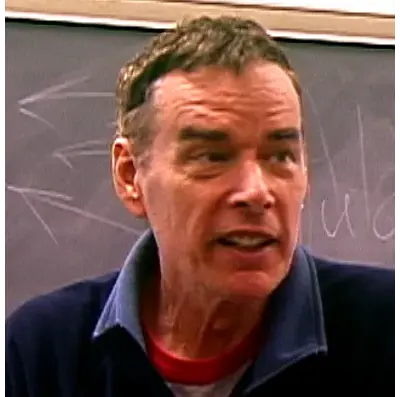
William F. Patry is an American lawyer specializing in copyright law. He studied at the San Francisco State University, where he obtained a B.A. in 1974 and an M.A. in 1976, and then at the University of Houston, where he graduated with a J.D. in 1980. He was admitted to the bar in Texas in 1981, in the District of Columbia in 2000, and in New York in 2001.
