Lawrence Lessig Quotes
The real harm of term extension comes not from these famous works. The real harm is to the works that are not famous, not commercially exploited, and no longer available as a result.
Lessig, Lawrence. Free Culture: How Big Media Uses Technology and the Law to Lock Down Culture and Control Creativity. Penguin Press, 2004.


In America it used to be 26 years with a renewal for an additional 26 years. However, Mickey Mouse was about to go into the Public Domain, and Walt Disney and other large copyright holders lobbied to extend the copyright term to the life of the author plus 100 years. See {624751}.


Guthrie was one of the many people who used the copyright law to prevent someone else from restricting the information and allowing wide utilization of their proprietary material. This is sometimes called “copyleft.” This quotation collection is another example of copyrighted material with broad encouragement of utilization.


Getting agreement of different nations on copyright protection has always been a problem.

Note that the only reason given in the constitution for protecting intellectual property was to promote the progress of science and useful arts. Inventors, would keep secret their inventions and techniques of manufacture and use in order to protect their economic interests. No one else would be able to benefit by understanding the invention and taking it further and increasing knowledge and understanding. So the Founding Fathers told Congress to establish a system where inventors would get a guarantee of a reasonable time to profit exclusively from the invention in exchange for making the invention public. The plans, methods and drawings had to be made public and until the 20th century a model of an invention had to be supplied to the Patent Office. Anyone could get an inexpensive copy of any patent and come and study the models. Today, most people believe that the reason for a patent system is to protect the intellectual property of the inventor, but that was not a purpose or even a serious consideration. The reason however was educational and to demystify technology and produce more science and technology which it did.


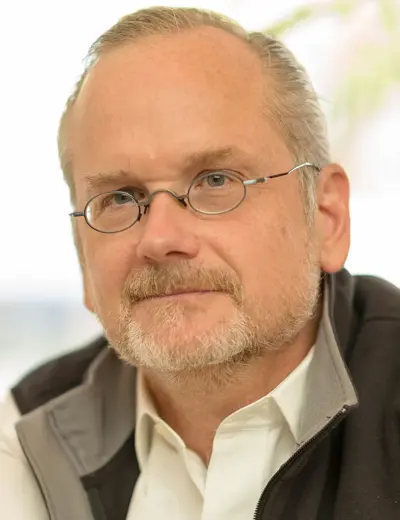
Lester Lawrence Lessig III is an American academic, attorney, and political activist. He is the Roy L. Furman Professor of Law at Harvard Law School and the former director of the Edmond J. Safra Center for Ethics at Harvard University. Lessig was a candidate for the Democratic Party's nomination for president of the United States in the 2016 U.S. presidential election, but withdrew before the primaries.
