Pearl S. Buck Quotes
Men always suffer when women are ignorant. They suffer more than women, not only because women are stronger than men and more resistant, but because men are peculiarly vulnerable to the damage ignorant women can do at the periods of their life when they most need intelligent and wise care: in infancy, in adolescence, in times of illness and mental and emotional crisis, and in old age.
Pearl S. Buck, 1892-1973, Nobel Laureate in Literature, Of Men and Women, 1941
Sourced by: Eigen's Political and Historical Quotations

Dr. Saadawi was fired from her government post for revealing the status of women in the country. She was also actually arrested and jailed as well for impairing national “values.” See .{586709}.


This proverb is a large part of the conceptual basis of the concept of honor killing. It starts with the notion that women are property. However, being animate property women are in the same class as livestock. And if a camel or a donkey get lose and does damage, the owner is responsible. So if a woman does something wrong, it is the father or the husband who is responsible. Since sexual behavior of most kinds is contrary to the Islamic custom and law, any activity in this regard, demonstrates that the father of husband has not been up to his obligations and is therefore dishonored. Therefore, the least he can do, to provide a deterrent to other women is to kill the offending female. Without the concept of property, the entire chain of logic collapses under its own weight.

Jinnah was a modern Islamist who saw the role of females in a modern context. He, like the Indian Hindu leaders were in a sense products of the West and Western government and education. He would be very surprised that in his Pakistan men can murder their female relatives who they believe have dishonored the family, or that women would not be educated in the Madrassas, or that authorities could sentence a female relative of a man deemed guilty of seduction to be gang raped, but that is what happens in modern Pakistan. Jinnah and many of the early leaders believed that their new government could modernize Islam but the control and influence went the other way. Pakistan became a religiously dominated autocracy rather than the democracy that Jinnah foresaw.

He was a major critic of French Quebec Separatism and some elements of French Canadian culture including his perception of sexism. His French Quebec Separatist enemies translated passages of this work into French and (some say deliberately) mistranslated this line to read: Quebec women are sows. The quotation was bandied about Canada in the original version as well as the mistranslation.


The secular government and the equal rights of women which transformed Turkey into a modern state under Ataturk had its roots with others in addition to Attaturk, Riza was the one who lead the parliament. Despite the Koran and Islamic tradition, polygamy was later abolished in Turkey—the first Islamic state to have done so since the founding of the religion.


Much of the culture of sexism and racism is perpetuated by language—especially the language of leaders, role, models, and authority figures. “Political correctness” cannot, in a free society, be enforced on anyone. However, making people aware of the implication of certain kinds of language usage is important provided it doesn’t cross the line of curtailing freedom of speech. People who want to perpetuate sexism by their choice of language have the right to do so in America. What is sad, however is the many people who are perpetuating sexism without ever intending to do so. Abdul-Jabbar has been a leader who has made many male sports figures more aware if the implications of their language usage.


Manava Dharma Shastra. This text is a part of the Hindu Holy Texts. Hindus believe that Manu was a prophet whose text is revealed or inspired.


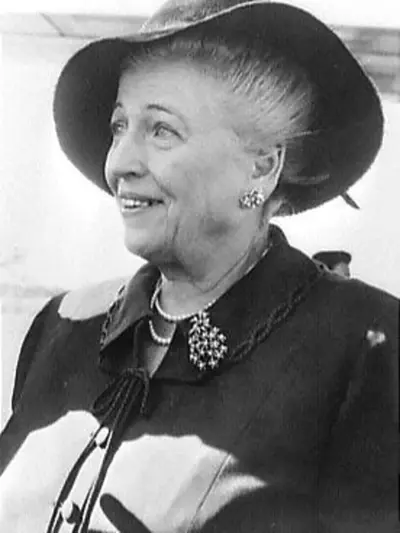
Pearl Sydenstricker Buck also known by her Chinese name Sai Zhenzhu (Chinese: 赛珍珠) was an American writer and novelist. As the daughter of missionaries, Buck spent most of her life before 1934 in Zhenjiang, China. Her novel The Good Earth was the best-selling fiction book in the United States in 1931 and 1932 and won the Pulitzer Prize in 1932. In 1938, she was awarded the Nobel Prize in Literature "for her rich and truly epic descriptions of peasant life in China and for her biographical masterpieces". She was the first American woman to win the Nobel Prize in Literature.
