Jawaharlal Nehru Quotes
Keep him [Muhammad Ali Jinnah] far away and prevent his muddled and arrogant head from interfering continually in India's progress.
Jawaharlal Nehru, 1889-1964, Prime Minister, India, Prison Diary, 1943
Sourced by: Eigen's Political and Historical Quotations

This is another example of how President Roosevelt conducted his own international diplomacy independent of his own State Department. At the time, the U. S. State Department would not have any contact with Nehru who was in and out of British Indian jails for his anti-Colonial agitating. Roosevelt, however was a great admirer of Nehru and the Congress party and the commitment to democracy, freedom of religion, speech and the press and civil rights. Roosevelt and the American military strategic leaders were beginning to worry that China, even with help, would not be able to hold off the Japanese aggression, and India would become a frontier for the Allied war effort. The President realized that Nehru and his Congress Party were pressuring England for independence and extreme Indian nationalists were advocating non-support of the British military effort and strikes and protests to bog down the British army dealing with them instead of fighting the Japanese in Burma and elsewhere. There were a large number of Indian Brigades fighting for the British and if the Indian military volunteers were to be discouraged or boycotted, the allied war effort would suffer. So the President's style was to personally see what he could contribute over and above (and often to the distress of) his agencies established to do the job.

President Johnson was trying to organize peace talks in Paris. Nixon didn’t want a public announcement to occur before election day when he was running against Hubert Humphrey. Knowing the South Vietnamese President was reluctant to go to Paris but was under pressure from America to do so, he sent a message through Chennault that he should not accept and “hang on” as Nixon would shortly win. The South Vietnam president refused to go to Paris, Nixon won the election, and then had to cope with the continuation of the war that might well have ended before he took office. Nixon believed that he could get Russia and China to pressure Ho Chi Min to make peace. Nixon's private overtures to the South Vietnam president, violated the Logan Act which prohiited private citizens negoatioating with foreign governments. President Johnson was aware of Nixon's commission of this felony want wanted to prosecute him, but the evicence had been obtained from secret intelligene agency bugging and wiretapping both the South Vietnam Embassay in Wishington and the Presidential Palace in Vietnam the public knowledge of which would have caused a scandal. Instead, he called Nixon and warned him to stop, but the damage had already been done, and the South Vitenamese government would not go to Pariis where they would have to agree to a coalition government with the Communists. THey waited for Nixon to deliver a peace treaty which would leave them in charge of South Vietnam. In the final analysis, the South Vietnamese ended up with nothing and no participation in anything when the U. S. Withdrew and the Communists took over.

That is exactly what happened. However it would not happen until after the Second World War.


Horace Greeley was constantly writing editorials about who should be promoted in the army


They were the “untouchables”. Under English rule and law, they had more opportunity, equality and protection than ever before. They opposed the idea of home rule and passing rule to an Indian parliament and ministers as ol the upper castes would dominate and control the government and would discriminate against them as they had always done before English rule. What they worried about came of to pass, but the Congress Party which dominated much of Indian politics was opposed to the Caste system and went out of their way to make it illegal and to institute affirmative action. However, regardless of the law, the Cast System still exists, and the discrimination is a current problem for India and the untouchables.


He attempted to broker an agreement between India’s Muslims and Hindus as to the form of the successor government.


The warlord flipped back and forth between the Communists and the Autocrat, Chiang Kai-shek’s Kuomintang government fending both off so that he could rule his province as he wished. It illustrates that when the Kuomintang and the Communists accused each other of allying themselves with brutal warlords, they were both right. In the quest for victory in the Chinese Civil War, both sides made a mockery of their “principles”.

Bush adopted a foreign policy of unilateralism which was offensive to and resented by most of the foreign countries with whom we had good relations. Many people thought it would take years to repair the damage, but President Obama and Secretary of State Hillary Clinton were able to turn the situation around in a few years. The George W. Bush administration, in contrast to his father’s administration, was considered an aberration in American foreign policy by most countries.
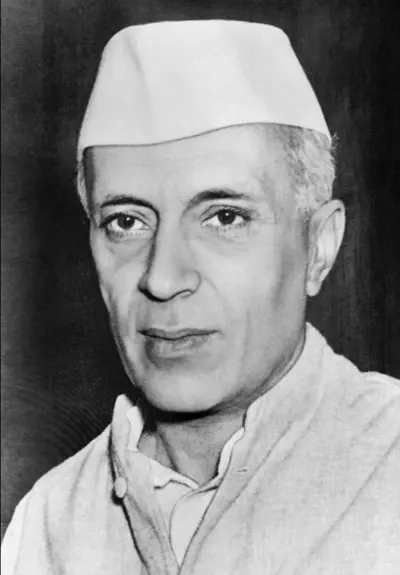
Jawaharlal Nehru was an Indian independence activist and, subsequently, the first Prime Minister of India, as well as a central figure in Indian politics both before and after independence. He emerged as an eminent leader of the Indian independence movement, serving India as Prime Minister from its establishment in 1947 as an independent nation, until his death in 1964. He was also known as Pandit Nehru due to his roots with the Kashmiri Pandit community, while Indian children knew him better as Chacha Nehru (Hindi: Uncle Nehru).
