Sheng Shicai Quotes
Chiang Kai-shek does not like my policies but he cannot do anything to me. I am too far away from his reach.
The warlord flipped back and forth between the Communists and the Autocrat, Chiang Kai-shek’s Kuomintang government fending both off so that he could rule his province as he wished. It illustrates that when the Kuomintang and the Communists accused each other of allying themselves with brutal warlords, they were both right. In the quest for victory in the Chinese Civil War, both sides made a mockery of their “principles”.
Sheng Shicai, 1897–1970, Chinese Warlord & Ruler of Xinjiang, Kuomintang's Republic of China Minister of Agriculture and Forestry, Jeremy Brown, Paul Pickowicz, Dilemmas of victory: the early years of the People's Republic of China, 2007
Sourced by: Eigen's Political and Historical Quotations

3rd Viscount Palmerston. Lajos Kossuth was the Hungarian leader of anti-monarchists who were agitating for a Parliament. While many English people sympathized with Kossuth, his government, which had good relations with England, did not want any of the other European Governments to officially meet with him. It was considered insulting to a government if a friendly government met officially with a politician who was not approved by his own government. Palmerston, as Temple was referred to, wanted to show English sympathy with the reforms advocated by Kossuth. He was then the Foreign Minister and wanted to invite Kossuth to the Foreign Ministry. However the Cabinet had a meeting and voted against the idea which would not only inflame the Hungarian government, but would outrage all the other countries in Europe for this diplomatic insult. Palmerston then decided that he would meet with Kossuth in his private residence. When the Prime Minister discovered this plan, he sent a note by messenger telling Palmerston that he was the Foreign Minister and inviting Kossuth to his home could not be seen as an official action. Palmerston has his own political base and had enough supporters in Parliament that if he would be fired, he could bring down the coalition government. So in effect he told his Prime Minister off and dared Russell to fire Palmerston. Then he went ahead with the meeting. The cabinet was upset, Queen Victoria was outraged (she never cared for Palmerson as a Foreign Minister), the Newspapers had a field day, and all the European counties complained vehemently to the Queen and the Prime Minister. But Russell didn’t dare fire Palmerston at that point. However, with Queen Victoria’s shrewd political maneuvering and Russell coalescing support, he was able to demote Palmerson to Home Secretary and assume the Foreign Ministry himself in 1952. However, Palmerston had the final winning hand, when 3 years later, he was elected Prime Minister and he and the Queen had to make a rapprochement.


Blair was then the leader of the opposition Labor party. Major, the prime minister, did not have firm control of his own party and was whipsawed between different factions. He was ousted by his own party, not by losing an election.


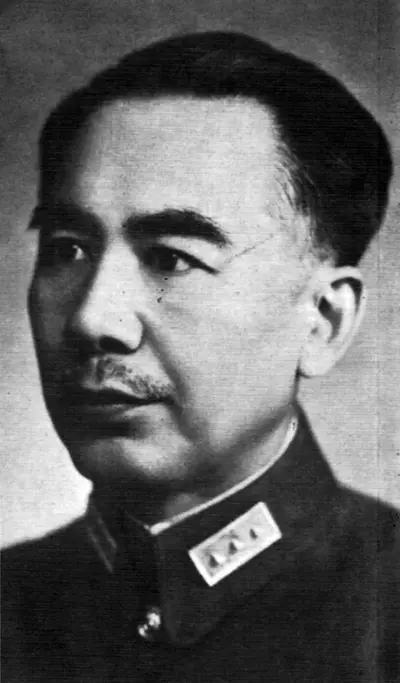
Sheng Shicai was a Chinese warlord who ruled Xinjiang from 1933 to 1944. Sheng's rise to power started with a coup d'état in 1933 when he was appointed the duban or Military Governor of Xinjiang. His rule over Xinjiang is marked by close cooperation with the Soviet Union, allowing the Soviets trade monopoly and exploitation of resources, which effectively made a small part of Xinjiang a Soviet puppet state. The Soviet era ended in 1942, when Sheng approached the Nationalist Chinese government, but still retained much power over the province. He was dismissed from post in 1944 and named Minister of Agriculture and Forestry. Growing animosity against him led the government to dismiss him again and appoint to a military post. At the end of the Chinese Civil War, Sheng fled mainland China to Taiwan with the rest of Kuomintang.
