Ulysses S. Grant Quotes
If I saw Greeley, I would tell him that when I wanted the advice of a political editor in selecting generals I would call on him.
Horace Greeley was constantly writing editorials about who should be promoted in the army
Ulysses S. Grant, 1822-1885, 18th President of the United States (Republican, OH), 1864
Sourced by: Eigen's Political and Historical Quotations


He was responding to criticism that the media was bashing the President.


During the Civil War, General Joseph Hooker castigated the President and called for a dictator to assume power:


The President told McNamara that if the administration does not send the troops the Generals want, they will be blamed for any military failures that occur. If they do send all the troops that the Joint Chiefs wanted, they would be going far beyond the limits that the Defense Secretary recommended and the President would have preferred. JBJ felt he really had no political choice. He authorized the wanted troops further escalating the war. See his special assistant’s question about that decision in {617151}.

The “light at the end of the tunnel” was an analogy which is military advisors were using at the time.

Roosevelt promoted Eisenhower over more than 300 more senior generals and put him in charge of the American Forces invading North Africa—the first American combat in the war. In addition to commanding the American forces, he was also responsible for dealing with many leading politicians from Winston Churchill to the very difficult French General Charles De Gaulle. That is why Eisenhower was picked, and a brilliant pick it was.


General Shafter had a major attack of Gout, a terribly painful disease for which there was little relief at the time. As a result he had little involvement in the battle of Santiago at the most critical period. Crassus was an incompetent general in a famous Roman battle.


Until the 20th century almost all American political media were shamelessly and overtly biased—left or right. Political Parties had their own de facto publications much like Fox News became for the Republicans in the 21st century. In the 20th century journalism developed into a profession that evolved standards of objectivity in reporting. That norm then prevailed for about 70 years. With the extreme polarization of the later years of the 29th Century the right wing began to accuse much of the media of a left wing bias, and the media tended to react as Krugman describes in this quotation. The model of having spokespersons for “each side” of an issue works for highly subjective political preferences with a two party system, but where it broke down is with scientific and technical issues. On these, there often really are not two scientific points of view, but there is a scientific consensus of the vast majority of scientists and almost all the prestigious and accomplished scientists are in accord. However, there may be some who have a cultural, religious and/or political concern for some science and its implications for society. They in turn find a scientist or two, often one who is unaccomplished and not recognized in the scientific field to argue a different point of view. The media have tended to equate the two and have a “debate” as if there were two sides to the science when there are not. These issues tend to cluster around scientific medical issues involving sex and birth control methods, environment and conservation, evolution, the age of the earth and the method of creation of the universe. The problem is particularly exacerbated by the general scientific illiteracy of the American population and the relatively few journalists who themselves are scientifically literate who can explain scientific issues well.


Neville Chamberlain is viewed in Britain as one of the worst appeasers of all time. He refused to fulfill the obligations of Great Britain when Hitler invaded parts of Europe. He appeased Hitler because he wanted to avoid war and is a historical icon of a person who would do anything to avoid war.

Sherman felt that the newspapers of North and South fired up hatred of one side against the other and especially in the South, falsely reported the chances of the Confederacy and made rational Southerners who wanted to minimize the death and destruction to their people were made to feel like traitors and cowards.

on the decision of whether to use military force against the Assad Syrian regime for their using chemical warfare against their own people


Bohlen, Harry Hopkins and President Roosevelt were differing as to how to deal with one of the many ego difficulties of French leader Charles De Gaulle. Ever the diplomat, and trying to find common ground, Bohlen said:
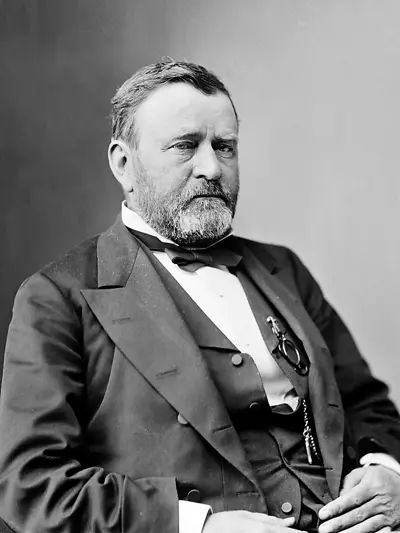
Ulysses S. Grant was an American military leader who served as the 18th president of the United States from 1869 to 1877. As president, Grant was an effective civil rights executive who created the Justice Department and worked with the Radical Republicans during Reconstruction to protect African Americans. As Commanding General, he led the Union Army to victory in the American Civil War in 1865 and thereafter briefly served as Secretary of War.
