Calvin Coolidge Quotes
[Referring to Herbert Hoover:] That man has offered me unsolicited advice for six years—all of it bad.
Calvin Coolidge, 1872-1933, 30th President of the United States (Republican, MA), Quoted by Paul Johnson, The Calvin Coolidge Presidency & American Society, C-SPAN, November 5, 1995
Sourced by: Eigen's Political and Historical Quotations

Horace Greeley was constantly writing editorials about who should be promoted in the army


Bohlen, Harry Hopkins and President Roosevelt were differing as to how to deal with one of the many ego difficulties of French leader Charles De Gaulle. Ever the diplomat, and trying to find common ground, Bohlen said:


This quotation is interesting for two reasons. It is a clever put down and more important it illustrates the character of public discourse in the runup to the 2012 Presidential elections. Many of the Republicans and a few Democrats had been very successful with repeated character assassination and negative campaigning about their opponents. The Republicans had become so successful, that in 2011 with a number of Republicans seeking the party nomination for the 2012 Presidential election, the aspirants and their supporters began to apply the successful techniques against members of their own party. Frum who was supporting Mit Romney had this to say about Ron Paul, another candidate, who was a libertarian and had some views that many Republicans did not care for although he had a strong base of supporters amongst Republican voters.

Fox hunting was a sport engaged in only by the very wealthy. The House of Lords tends to represent the views and norms of the British upper classes who engage in Fox hunting. Skinner and the House of Commons wanted to ban Fox Hunting because it is a very cruel sport with dozens of dogs chasing a single fox and often tearing him apart before the riders arrive.

Chavez frequently insulted officials and leaders of other countries. See linked quotes for examples.

Blair was then the leader of the opposition Labor party. Major, the prime minister, did not have firm control of his own party and was whipsawed between different factions. He was ousted by his own party, not by losing an election.

Since the end of WWII till the breakup of the Soviet Union, the Bulgarians were part of the Soviet Bloc and operated under communism that was supposedly based on Marxism. However it was not in many critical respects. But few modern Russian style Communists are familiar with or understand Marxism.


The “bozos” beat him and won the Presidency. And then conducted a very successful foreign policy for 8 years.

Early in the Donald Trump Presidency, some of his first decisions, including his Anti-Muslim ban on immigration and vistitation from 7 Islamic nations, were very distrubing to amy politicians experienced in national security and defense. 100 leaders from past adminsitrations, Democratic and Republicans, signed a petition warning that the travek ban endangered our national security. Then 1000 U. S. State Department Diplomats signed a letter advising the President to recind the order for similar reasons. Malinowski was asked if this kind of opposition to a new presidents actions was unusual. This quotation was his reply. Not the use of sarcasim. He states what happened in very stark terms and then says that it is not unusual and there is notjing to worry about, when it was withotu precedent ever and very worrisome to him and others. Quotations using sarcasim are very problimatical becasue just a literal reading, would lead us to believe he was not concened with sich a common occurance.

While Bannon was more critical of anyone who disagreed wiuth him than most, it was unusual for a conservative to use such harsh tems about a conservative presidential administration.


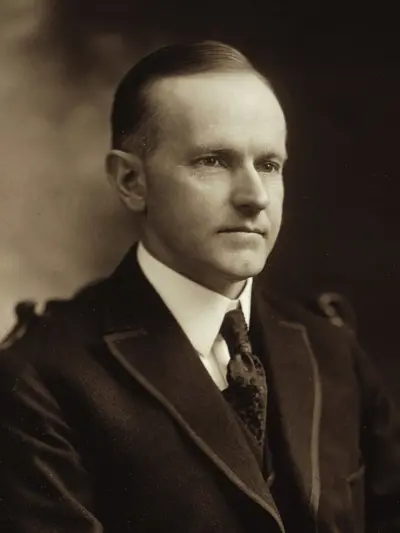
Calvin Coolidge was an American lawyer and politician who served as the 30th president of the United States from 1923 to 1929. A Republican lawyer from New England, born in Vermont, Coolidge worked his way up the ladder of Massachusetts state politics, eventually becoming governor of Massachusetts. His response to the Boston Police Strike of 1919 thrust him into the national spotlight and gave him a reputation as a man of decisive action. The next year, he was elected the 29th vice president of the United States, and he succeeded to the presidency upon the sudden death of Warren G. Harding in 1923. Elected in his own right in 1924, he gained a reputation as a small-government conservative and also as a man who said very little and had a rather dry sense of humor.
