Learned Hand Quotes
It is of course true that any kind of judicial legislation is objectionable on the score of the limited interests which a Court can represent, yet there are wrongs which in fact legislatures cannot be brought to take an interest in, at least not until the Courts have acted.
Learned Hand, 1872-1961, U. S. Supreme Court Justice, Letter to Louis D. Brandeis, January 22, 1919
Sourced by: Eigen's Political and Historical Quotations

Cummings was arguing against a Constitutional amendment. His alternative led to Roosevelt's court packing schema.


In many nations, there is little judicial independence from the government. Judicial decisions that thwart government sometimes produce retaliation ranging from reducing the pay or staff of judges, threatened investigations and impeachment even arrest and execution---sometimes by government ‘death squads’. Even in the United States, the beginning of the 21st century, was fraught with so many examples of judicial intimidation threats, that two Supreme Court justices began speaking throughout the country to educate the public to this problem. In general, the more democratic and free a nation is, the more frequently the courts will disallow activities of the executive and even the legislature.

The dramatic thing about this quotation is that in public, the mantra of conservatives about the courts of America is that they make and change laws as opposed to just interpreting and clarifying the laws. They traditionally accuse judges who rule against their favorite positions as using the courts as an instrument of political and social change. Here a leading conservative federal jurist, who thereafter became a member of the Supreme Court, was acknowledging and advocating the courts as instruments for conservative social, economic, and political change.


See John Marshall's later (1803) use of the concept and term "repugnant." {606483}


Some of the Founding Fathers did not conceive of the kind of judiciary where Federal courts could nullify an act of the Congress by declaring a law unconstitutional. Morris was one. Others did. The Constitution is not very explicit on this point, but the nation has settled with a process that would have surprised Morris and a few others.


While this may have been true in some European nations, many disagree completely with this assertion for America. They point to the thousands of laws passed by Congress to cut back or diminish the power that they had earlier given the agency. These counter-examples to Hayek’s view are particularly evident after most wars. What often does happen is that Congress votes a temporary power to a government agency, and when the temporary power time is coming to an end, many citizens and officials are so happy with the result of granting the power, that the power is then granted permanently, sometimes to the distress of some legislators who voted for the power with the understanding that it would be temporary. However, Congress may, and often does, change its collective mind. Coercion to Hayek includes for example, taxation if there are criminal penalties for failure to pay the tax or regulation where a government agency may require or prohibit certain behavior of a business or individual and most people would agree that even in a democracy there are coercive aspects of much government activity.

This surprising quote of Roosevelt’s is noteworthy for two reasons. First most of us are amazed that one of our greatest presidents were opposed to the Checks and Balances of the Constitution as it has been interpreted since Chief Justice Marshall and his Court asserted the power of Judicial Review. Second, at the beginning of the 21st century the Republicans / Conservatives opposed the power of the Supreme Court and wanted it diminished, while the Democrats were strong supporters of judicial review. In TR’s era, the parties were flip flopped. It was William Jennings Brian and the Democrats who wanted to curtail the power of the court (they had then found even the income tax unconstitutional), while the Republicans / Conservatives fought to uphold the “traditional” role of the Supreme Court. Roosevelt, not only sided with the Democrats against his own party, but went further than Bryan or any other Democrat in calling for the voter’s right to review and nullify Supreme Court Decisions that were unpopular. Needless to say, most of TR’s Republican compatriots were not happy with him, but that was not uncommon as he took on the trusts and monopolies, set up national parks, established Federal Regulation of Food, and other positions that out reformed the Democrats.


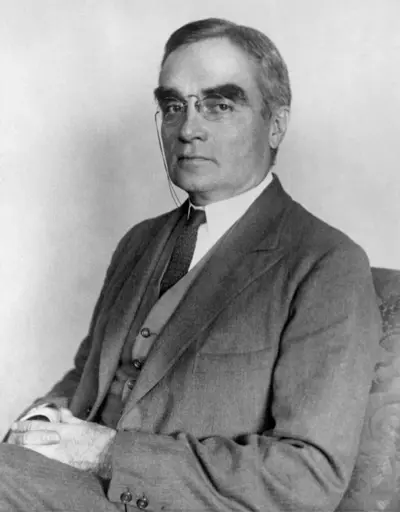
Billings Learned Hand was an American judge and judicial philosopher. He served on the United States District Court for the Southern District of New York and later the United States Court of Appeals for the Second Circuit. As of 2004 Hand had been quoted more often by legal scholars and by the Supreme Court of the United States than any other lower-court judge.
