David Brooks Quotes
I'm a little uncomfortable with the idea of judges overruling presidents on national security matters.
Brooks, David. PBS NewsHour, Public Broadcasting Service, 10 Feb. 2017.


Hatch was the chairman of the Senate Judiciary Committee at the time.


In many nations, there is little judicial independence from the government. Judicial decisions that thwart government sometimes produce retaliation ranging from reducing the pay or staff of judges, threatened investigations and impeachment even arrest and execution---sometimes by government ‘death squads’. Even in the United States, the beginning of the 21st century, was fraught with so many examples of judicial intimidation threats, that two Supreme Court justices began speaking throughout the country to educate the public to this problem. In general, the more democratic and free a nation is, the more frequently the courts will disallow activities of the executive and even the legislature.

One of the conundrums of our constitutional system is who has the last word as to what the Constitution means. Essentially it is the judicial branch headed by the Supreme Court. But there are those who believe that the current popular majority should have a say in what is or is not constitutional. If so the legislative branch should have the last word. Still others say that the President is the only person elected by ALL the people, so his opinion most reflects the will of the public. And then there are most who argue that the Constitutional system was created just to avoid the power of currently popular majorities, and the courts should decide based on the Constitution itself. So the statement has very little meaning except that Phillips thinks that the courts have too much power. Whoever gets to decide what is or is not Constitutional will be accused of being “over” the Constitution by those who don’t like the decisions. In our system, that is the courts.

The President had authorized the NSA to spy Americans who might have been suspected of being themselves or being in contact with terrorists without obtaining permission of a court including the Foreign Intelligence Surveillance Act (FISA) special court that had been established for these cases. Instead the administration argues that it was inherent in the powers of the Presidency in time of war.


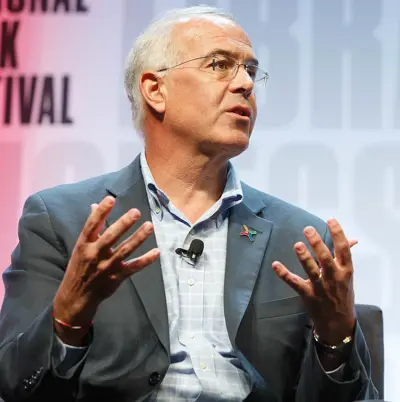
David Brooks is a conservative political and cultural commentator who writes for The New York Times. He has worked as a film critic for The Washington Times, a reporter and later op-ed editor for The Wall Street Journal, a senior editor at The Weekly Standard from its inception, a contributing editor at Newsweek, and The Atlantic Monthly, and a commentator on NPR and the PBS NewsHour.
