Daniel Webster Quotes
It is no monopoly in any other sense than as a man's own house is a monopoly. But a man's right to his own invention is a very different matter. It is no more a monopoly for him to possess that, than to possess his own homestead .
Webster, Daniel. "Goodyear v. Day." The Writings and Speeches of Daniel Webster, Vol. 15, Little, Brown, and Company, 1903, p. 438.


When Secretary of State, Jefferson ran the first American Patent Office. The Patent system was originally and educational program, not an intellectual property program. Inventors would keep all their technological secrets to themselves. The idea behind the original patent system was to give an inventor a limited monopoly on profiting from his invention in exchange for sharing his information and techniques with his countrymen—thus improving the technological competency of the entire society. The very first patents were available for public inspection for that reason. And even today, copies of patents are available easily for almost no cost. And few American ideas worked as well as our early patent system. Through its educational role and technology transfer, America came from technological nowhere to being the pre-eminent inventing nation of the world. The balance between public access to invention and innovation and preservation of some rights to the creator of intellectual property is key to modern development.

At the time copyright, patents, and intellectual property in general were relatively new ideas. Property had in earlier countries been limited to tangible things—including people (wives and slaves). The Western world had in large part adopted the concept of intellectual property in law, but the average person’s thinking did not include these intangibles as “property.

Day was often associated with left wing causes, but she was very hard to classify in traditional political terms. This quotation shows that unlike most communists and many socialists, she was an advocate of private property although she fought for the ability of a larger proportion of the population to have property.


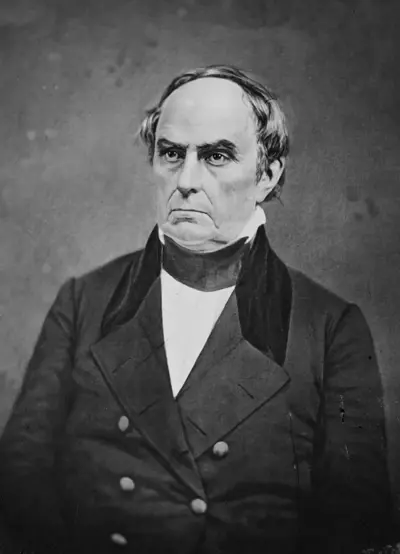
Daniel Webster was an American lawyer and statesman who represented New Hampshire and Massachusetts in the U.S. Congress and served as the U.S. Secretary of State under Presidents William Henry Harrison, John Tyler, and Millard Fillmore. As one of the most prominent American lawyers of the 19th century, he argued over 200 cases before the U.S. Supreme Court between 1814 and his death in 1852. During his life, he was a member of the Federalist Party, the National Republican Party, and the Whig Party.
