Craig Venter Quotes
Patents are basically rights to try and develop a commercial product.
Venter, J. Craig. A Life Decoded: My Genome: My Life. Viking, 2007.


One major purpose of the patent system is to get inventors to disclose their inventions and explain how they work and in exchange they get a temporary monopoly to profit from the invention. That is why all patents are available to the public so that science can advance if all other see how something was done. Despite the Douglas View, gadgets have been patented if they had some novel element to their functioning.


This is a very important quotation in the Patent world. One of the major justifications for giving patent monopoly to an inventor is that without the patent protection people would not invest time, effort or money to invent things. However many of the great inventors have not agreed. The original Constitutional purpose in granting patents was to stimulate disclosure of technology to other inventors and educate the nation. That is why all patents are public and can be viewed by all.


The Church of Scientology has repeatedly been accused of fraudulent activities masking as a religion, taking advantage of the United States Constitution protection of freedom of religion. Many religions raise money—tax free—and the government has no right to audit their books. However some people form religions / cults mainly for the economic profits they can make. The evidence in this hearing seemed to indicate that this was the case for the creation of Scientology. Other countries treat Scientology as nothing but a consumer fraud and do not allow its operation or severely restricts it. The officials of the church protest vehemently that this is religious persecution. See {585647} .

When Secretary of State, Jefferson ran the first American Patent Office. The Patent system was originally and educational program, not an intellectual property program. Inventors would keep all their technological secrets to themselves. The idea behind the original patent system was to give an inventor a limited monopoly on profiting from his invention in exchange for sharing his information and techniques with his countrymen—thus improving the technological competency of the entire society. The very first patents were available for public inspection for that reason. And even today, copies of patents are available easily for almost no cost. And few American ideas worked as well as our early patent system. Through its educational role and technology transfer, America came from technological nowhere to being the pre-eminent inventing nation of the world. The balance between public access to invention and innovation and preservation of some rights to the creator of intellectual property is key to modern development.

This quotation is an excellent statement of one major viewpoint about patents. However there are others who disagree and many who believe the existing patent system is broken and inhibits innovation. They observe that the vast majority of patents never are developed or reach the public. They also point to major counter-examples to Thomson’s view. The best is the PC which IBM developed and decided NOT to patent it, to encourage people to produce programs, applications and many devices. No product in human history has been more thoroughly developed and adopted by as many people as quickly. More capital investment money has been invested that any other invention. There are many examples where Thompson’s point holds. Vaccines for which there is no patent have not obtained any company who would manufacture it despite the need. The issue is complex with the old view of Thomson certainly not correct, but not entirely wrong either.

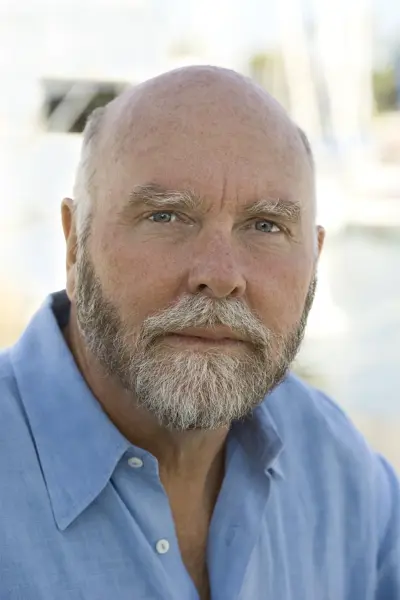
John Craig Venter is an American biotechnologist and businessman. He is known for leading the first draft sequence of the human genome and assembled the first team to transfect a cell with a synthetic chromosome. Venter founded Celera Genomics, The Institute for Genomic Research (TIGR) and the J. Craig Venter Institute (JCVI), where he currently serves as CEO. He was the co-founder of Human Longevity Inc. and Synthetic Genomics. He was listed on Time magazine's 2007 and 2008 Time 100 list of the most influential people in the world. In 2010, the British magazine New Statesman listed Craig Venter at 14th in the list of "The World's 50 Most Influential Figures 2010". In 2012, Venter was honored with Dan David Prize for his contribution to genome research. He was elected to the American Philosophical Society in 2013. He is a member of the USA Science and Engineering Festival's Advisory Board.
