Harold L. Ickes Quotes
It is impossible to carry the American people along with you on a program of caution to forestall a threatening position.
In his administration the public was not willing to spend the money to arm for the Fascist rise and aggression in Europe in the far East. It seems to be a characteristic of the American people whether the thread comes from a foreign military power, a massive dust bowl erosion, the rise of Communism or global warming. Americans are galvanized into action when the problem becomes critical but until then we are passive.
Harold L. Ickes, 1874-1952, U.S. Secretary of the Interior (Republican), Franklin Delano Roosevelt Papers
Sourced by: Eigen's Political and Historical Quotations


Alluding to the practice of advisors and handlers scripting and packaging presidential candidates for conventions and debates:


Wilson did not threaten Germany when they invaded Belgium in WWI. TR thought Wilson “soft”. He entered the war 3 years later only after the Germans had torpedoed two American passenger liners. The Germans were hoping to keep America out of the war. TR would have threatened Germany at the beginning, and if they did not withdraw from Belgium, he would have sent American troops. Wilson was not sure public opinion would support American entry into the war, even after our first ship was sunk by German U-boats. It took two. Roosevelt, as he said in the letter, the American people would have followed him. He was probably right as his public popularity was very high and he had remarkable leadership skills. He did not assess public opinion. He made public opinion. Theodore Roosevelt, George Washington, and Franklin Delano Roosevelt are probably the only 3 American Presidents who had the trust and leadership ability to lead the country into a major war where we were not attacked first without lying as to the circumstances and the danger. President Clinton honestly led the country into the Balkan war, but it was to be an air war only with no soldiers fighting on the ground. It was a significant war that we won and did not lose a single fighter.


1st Earl Baldwin of Bewdley. Though members of the same Conservative Party, Churchill was a major opponent of Baldwin’s peace and “appeasement” efforts and publicly castigated Prime Minister Baldwin. Yet Baldwin, if he could not stave off war, wanted his critic to serve as Prime Minister if war was inevitable. Churchill never had much respect for Baldwin. See {626930}.

Mencken was a brilliant and funny but pompous snob who had little respect for the average person.


This is a wonderful historical picture of FDR on his campaign train. Note that the President liked to listen to ideas of many people. Unlike most Presidents he did not have any particular political programs that he advocated in his campaigning. He had no immediate answers to the Great Depression that he had inherited from the Hoover administration. But unlike Hoover, and most Presidents, he was willing to try ideas for which there was no advance evidence of success. If that did not help, he would try something else. He sought ideas from anyone and everyone. His enemies called him a weak leader who had no ideology—no principles but just trying unproven solutions to solve the nation’s critical problems. But it worked and he was elected 4 times—the only President who had served even 3 terms.
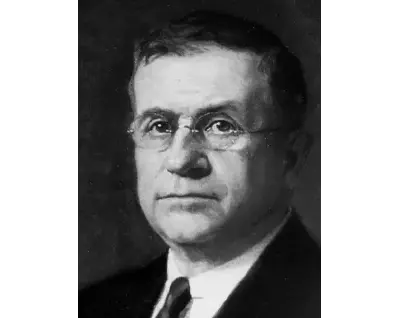
Harold LeClair Ickes was an American administrator and politician. He served as United States Secretary of the Interior for 13 years, from 1933 to 1946, the longest tenure of anyone to hold the office, and the second longest-serving Cabinet member in U.S. history after James Wilson. Ickes and Labor Secretary Frances Perkins were the only original members of the Roosevelt cabinet who remained in office for his entire presidency.
