George III Quotes
It is essential to our interest and the security of our colonies that the several nations or tribes of Indians... who live under our protection, should not be molested or disturbed.
George III. By the King, A Proclamation. Mark Baskett, 1763.

Despite Jefferson’s reasonable intentions towards the Indians, all the boundaries never did get fixed and existing agreements and treaties were abrogated usually by whites acting illegally but then were supported by their state government and if serious hostilities broke out, the Federal government usually entered the fray to defend the whites regardless of whether or not they abrogated the treaties. Some Indian nations complicated the situation by having a tradition of raiding neighbors and stealing horses or other goods. Whites, insisting on then rather severe “English type” law enforcement often inadvertently, started an Indian war with the Federal soldiers almost always defeating the Indians leading to yet another treaty by which the Indians were pushed from their land, Further, many whites “bought” lands from Indians in good faith while the Indians did not own the lands, thought that they were selling hunting rights as they had no tradition of property ownership. The consequence was tragic history which Jefferson and his successors failed to manage well.

The Cupeno Indians were considered “Mission Indians” and hence were taxed by San Diego California authorities although they had no representation in government nor could they vote. Garra led his people and tried to unite all the Indians of California in an armed uprising against “taxation without representation”. He was found guilty and executed by a firing squad although he has not been terribly different from the New England patriots rebelling against the English.

Marshall was in general very sympathetic with the Indians and their rights, but even for him the notion of treating the Indians as sovereign masters of all their lands was unthinkable.

Not all whites were allowed to usurp all Indian lands. There were many attempts to limit white settlement to avoid friction with the Indians although the overall tendency was for the whites to take over and dominate the land.


Most of the Colonies had laws against Indians possessing guns and any white seeing such was allowed to attack such Indians. Rhode Island had peaceful relations with the Indians and not only allowed Indians to carry firearms for hunting but hired them to do the hunting as they were better at it and did not value their time as highly as the whites. However, travelers coming from out of the colony would see an Indian with a gun, and shoot at him thereby killing or injuring friendly Indians and causing racial problems when there were few. The quotation also illustrates that there was little uniformity amongst the colonies as to how to deal with their various social and political problems.


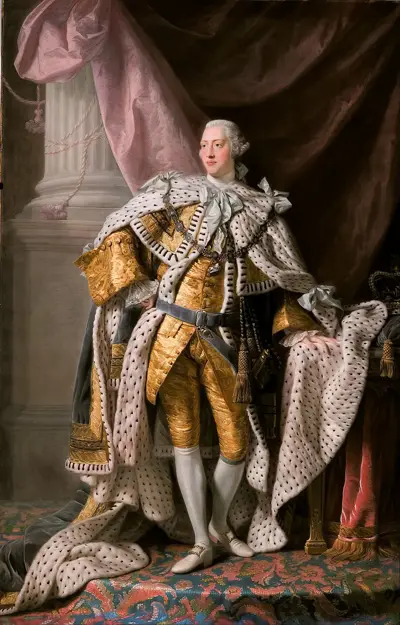
George III was King of Great Britain and Ireland from 25 October 1760 until the union of the two kingdoms on 1 January 1801, after which he was King of the United Kingdom of Great Britain and Ireland until his death in 1820. He was concurrently Duke and Prince-elector of Brunswick-Lüneburg ("Hanover") in the Holy Roman Empire before becoming King of Hanover on 12 October 1814. He was a monarch of the House of Hanover, but unlike his two predecessors, he was born in Great Britain, spoke English as his first language, and never visited Hanover.
