George Washington Quotes
It is a valuable ingredient in the general estimate of our welfare that the part of our country which was lately the scene of disorder and insurrection now enjoys the blessings of quiet and order. The misled have abandoned their errors, and pay the respect to our Constitution and laws which is due from good citizens to the public authorities of the society. These circumstances have induced me to pardon generally the offenders here referred to, and to extend forgiveness to those who had been adjudged to capital punishment. For though I shall always think it a sacred duty to exercise with firmness and energy the constitutional powers with which I am vested, yet it appears to me no less consistent with the public good than it is with my personal feelings to mingle in the operations of Government every degree of moderation and tenderness which the national justice, dignity, and safety may permit.
The early years of the United States were not without their rebellions.
George Washington, 1732-1799, 1st President of the United States (VA), Seventh Annual Message to Congress, December 8, 1795
Sourced by: Eigen's Political and Historical Quotations

Adams' interesting distinction was later taken much further by many communist countries in their treatment of "enemies" of "peoples' governments."


The British Governor was genuinely anxious to avoid bloodshed and the American Revolution. However, the conflict had been brought about by the actions of the British Parliament and the Kings ministers, and Gage did not have the power or authority to alter the issues of the fundamental conflict—taxation, colonial government, economics, self determination. While he offered pardons, in this proclamation he specifically exempted Samuel Adams and John Hancock of whom he said “whose offences are of too flagitious a nature …”


Vladimir Lenin

There had been a coup in Fiji which had been put down after a few weeks. There was thought of not reopening the fissures of the society by identifying and trying the plotters and participants in the coup. The Senator did not agree.

The Czar did not take the advice. The assassins were hanged.


The President refused since Lyon himself had not apologized and asked for forgiveness.


The revolution turned on many of its initiators including Vergniaud. He was guillotined along with other Girondists.


See {620510} for a much older expression of this idea.


In the related quote, Jackson makes the case against the South Carolina argument for nullification. Here he makes his threat which was very successful in ending the notion of “nullification”. The extensive quotation is given as it summarizes the entire issue that was one of the crises of early America.

For the required Oath, see {623308} . There were several to the amnesty. These included graduates of West Point and the Naval Academy who had joined the rebellion, senior officers and officials of the Confederacy, those who were accused of war crimes and abusing Union prisoners of war, persons who went abroad to help the Confederacy, and Northerners who had gone South to aid the rebellion. Many scholars think that although Lincoln had expressed his desire to provide an amnesty after the war was over, he probably would have been more lenient than Johnson who exempted many on the Southern side—especially the leaders. Ironically, Johnson was a Southerner but was personally, morally outraged at taking up arms against the United States and in that sense was much more of a hawk than Lincoln and many of the radical Republicans even. However, he was an inveterate racist and resisted most of the attempts to implement equality during the Reconstruction. Many argue that but for Johnson, Reconstruction might have been much more successful. It was easy for Southerners to resist equal rights for Blacks when they knew that the President was also opposed to measures to produce equality.

1st Earl of Beaconsfield
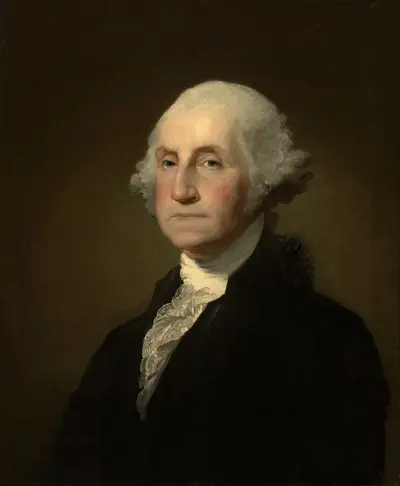
George Washington was the first President of the United States (1789-97), the Commander-in-Chief of the Continental Army during the American Revolutionary War, and one of the Founding Fathers of the United States. He presided over the convention that drafted the current United States Constitution and during his lifetime was called the "father of his country".
