William Easterly Quotes
Islam proved imperfect national cement, as many different varieties of Islam competed for the allegiance of Pakistanis.
William Easterly, Economist and Writer, Co-Director, NYU Development Research Institute, Comment on the creation of Pakistan as a Moslem nation, The White Man's Burden, 2006
Sourced by: Eigen's Political and Historical Quotations

The following year India was partitioned and millions of Hindus were slaughtered by Muslims and vice-a-versa.
Jinnah himself preached non-violence. At the time there was vicious sectarian violence throughout India but especially in The Frontier Province. However, the Muslims of the day did not heed him or Nehru or Gandhi for that matter and the violence continued. Jinnah however was a particularly shrewd politician who successfully used the threat of Muslim violence to obtain a separate Islamic state with Indian independence. He pointed to the threatening resolution issued earlier {627153}. The man who publicly preached peace, privately threatened violence.
The Punjab had been partitioned into a Pakistani part and an Indian part. The latter was a major province of the new state. But in the political process of drawing the boundaries, Jinnah and other Muslim leaders had used fanatic Muslim terrorists to massacre Sikhs and Hindus to ethnically cleanse areas and intimidate the ruling Indian Congress Party and the British government to obtain more area and resources for the Muslim state. However, at this point he had to govern, and there were still many Sikhs and Hindus as well as Christians and Buddhists in the new Muslim state. Jinnah's new state needed all the help it could get from the U. S. and others, and Jinnah started sounding like a passionate democrat. On paper religious freedom was guaranteed in Pakistan. However Pakistan became one of the most dangerous countries in the world for non-Muslims. Most historians agree that the Muslim terrorism in the short run had worked, as it would have been unlikely that India would have been partitioned in the absence of violence. However, it set in motion a cultural pattern of religious hate, bigotry, intolerance, violence and murder which would plague Pakistan thereafter. The politicians throughout the country's history have tried to use the Muslim religious, fundamentalist, extremists for their purposes only to find that the fanatics were out of control and the entire Pakistani population has lived in fear, lest an extremist decide that what they did or say was inimical to Islam and assassinate him or her. They have assassinated even the highest levels of politicians—President, Governors of Provinces, National Legislatures as well as Journalists, writers and academics. But the average Pakistani citizen has always been at risk of brutal murder with hundreds killed every year in an atmosphere of total impunity for the murderers. They have even murdered married women who had been raped on the grounds that they were adulterers and were therefore stoned.


Toleration is a relative term. The Muslim Moors made Christians (and Jews) pay a special tax. At times they were forced to wear special clothing so that they could be readily identified. And they could not build churches larger or taller than the smallest mosque in the community. At times, their occupations were restricted but at other times Christians and Jews were appointed to the highest positions like Vizier. The Inquisition, in contrast, forced all Muslims (and Jews) to leave the country without any of their property or money or be tortured and killed—usually by burning at the stake unless of course that they converted to Christianity.

While not in the Koran, this attributed statement is the basis for the ban on non-Muslims going on a Hajj and going to the most holy Muslim places—Mecca, Mina, Muzdalifa, and Arafat as well as the anti-religious hostility to all religions but Islam which is present in some Muslim countries.

At the time the Algerians leading the impendence movement were very secular, and were committed to modernity, multiculturalism and religious freedom and tolerance. Within Algerian Muslim society, there has been a constant battle against the right wing Islamic extremists and terrorists.

While it may be true that some major powers do not presently want unity between Muslims, the Sunni-Shiite conflict has been ongoing for centuries—long before many “major powers” even existed. It is the oldest, continual civil war in history. It is certainly true that major Islamic powers like Saudi Arabia oppose unity was Saudi Arabia is a Sunni majority country and regard the Shiites as not only blasphemous and evil, but see them as dangerous.


He was the scientist most responsible for the Pakistani nuclear bomb capability. However, he took his technological knowledge and without the knowledge of his government and contrary to their promises to the United States and other nations, accepted large secret payments to assist third world dictatorships to begin a nuclear weapons program. When he was caught, he was arrested but he is one of the very few world class scientists that Pakistan had ever had and was one of the most famous and popular Pakistani figures. The Pakistani Supreme court ruled that he was free to move about Pakistan but may not leave the country, and he is supposedly monitored to prevent his sharing nuclear secrets with terrorists and dictatorial states. In 2012 he formed his own political party.

In the rest of the Islamic world, the call to prayer was said in Arabic regardless of the national language. This reform was castigated by throughout the Islamic world who wanted Arabic to be the only language for Muslim religious communications. This was not unlike the insistence that they Catholic Church had maintained that all scripture was read in Latin and would not allow Bibles or mass to be said in any other language.
The reason he claimed that Governor Taseer was a blasphemer was that the governor opposed death penalty for saying or writing anything that was heresy or blasphemy as interpreted be fundamentalist Muslims. The Governor knew he was taking a risk. See {620970} .

After Independence, the original credo of the Indonesian hero and leader was slowly ignored. The Muslim majority established Islam as the dominant religion and began to create laws that discriminated against Christians, Hindus, Buddhists, and Jews. The ethnic Chinese had been very successful in business and commerce and soon they were discriminated against and even physically attacked in Pogroms.

Jinnah had whipped up his followers to violence so that Muslims were attacking Sikh and Hindu neighborhoods, burning them and murdering many occupants in different parts of India to intimidate the Indian Governmental Ruling Congress Party, The British Colonial Indian officials and the politicians in London to create a Muslim state—Pakistan—with all the territory that they demanded. Many Muslims were in turn killed in retaliatory attacks. The American diplomats and most English politicians tried to persuade Jinnah to compromise on the division of land and resources. Jinnah saw no reason at the time for compromise. However the internecine violence became so brutal and extensive that even Jinnah was shocked. The British would not be intimidated nor would the Indian Congress party and Jinnah was forced to compromise. Even with that, there were over 2 million Indians killed by the time the partition was complete. Jinnah and most other leaders were not willing to die themselves, but they were able to convince enough of their coreligionists to die.

While Perez describes the situation accurately, he does not mention here that there is a minority of fundamentalist Jewish Israelis, and they too do not make compromises easily. Nor do the Christian fundamentalists in the United States. All say, “How do you compromise with the will of God.”

The report was praised by some of the intellectuals of Pakistan and most of the non-Islamic world. However, Pakistan the discussion of each of the cleavages, instigated the public passion of the cleavage and nothing significant was done.

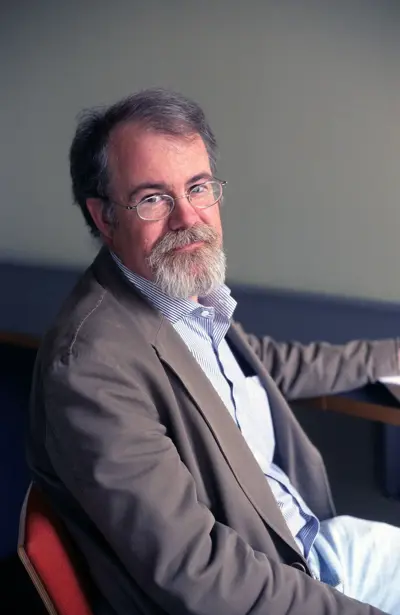
William Russell Easterly is an American economist, specializing in economic development. He is a Professor of Economics at New York University, joint with Africa House, and Co-Director of NYU’s Development Research Institute. He is a Research Associate of NBER, senior fellow at the Bureau for Research and Economic Analysis of Development (BREAD) of Duke University, and a nonresident senior fellow at the Brookings Institution in Washington DC. Easterly is an associate editor of the Journal of Economic Growth.
