Muhammad Ali Jinnah Quotes
You are free to go to your temples, you are free to go to your mosques or any other place of worship in this State of Pakistan. You may belong to any religion or caste or creed—that has nothing to do with the business of the State... We are starting with this fundamental principle that we are all citizens of one State
The Punjab had been partitioned into a Pakistani part and an Indian part. The latter was a major province of the new state. But in the political process of drawing the boundaries, Jinnah and other Muslim leaders had used fanatic Muslim terrorists to massacre Sikhs and Hindus to ethnically cleanse areas and intimidate the ruling Indian Congress Party and the British government to obtain more area and resources for the Muslim state. However, at this point he had to govern, and there were still many Sikhs and Hindus as well as Christians and Buddhists in the new Muslim state. Jinnah's new state needed all the help it could get from the U. S. and others, and Jinnah started sounding like a passionate democrat. On paper religious freedom was guaranteed in Pakistan. However Pakistan became one of the most dangerous countries in the world for non-Muslims. Most historians agree that the Muslim terrorism in the short run had worked, as it would have been unlikely that India would have been partitioned in the absence of violence. However, it set in motion a cultural pattern of religious hate, bigotry, intolerance, violence and murder which would plague Pakistan thereafter. The politicians throughout the country's history have tried to use the Muslim religious, fundamentalist, extremists for their purposes only to find that the fanatics were out of control and the entire Pakistani population has lived in fear, lest an extremist decide that what they did or say was inimical to Islam and assassinate him or her. They have assassinated even the highest levels of politicians—President, Governors of Provinces, National Legislatures as well as Journalists, writers and academics. But the average Pakistani citizen has always been at risk of brutal murder with hundreds killed every year in an atmosphere of total impunity for the murderers. They have even murdered married women who had been raped on the grounds that they were adulterers and were therefore stoned.
Muhammad Ali Jinnah, 1876-1948, Founder of Pakistan and First Governor General, Speech to the opening of the Punjab Pakistan Constituent Assembly, 1948
Sourced by: Eigen's Political and Historical Quotations


Actually, there was no initial concern or protest. The New York Boards voted unanimously to approve th project, Then one woman started complaining to the media and there were a number of people who also opposed the construction of a Then Islamaphobic people joined the protest, Many politicians observed that in Saudi Arabia, the nation from which most of the 9-11 attackers came from, it is but the country, it is illegal to bring a Bible into tnot only illegal to build a Christian Church or Jewish Synagogue ANYWHERE in the nation while America already has thousands of Mosques, Most other Islamic countries make it difficult if not impossible for a non Muslims to build a place of worship. Bloomberg reminded Americans that there was no objection that the government Constitutionally could make to the proposed mosque. Although other nations may prohibit religious construction, America was unique in adopting our First Amendment, the Separation of Church and State, and while a number of countries since have emulated America, most nations have not reached the point where they have matured sufficiently to realize the importance of separation of church and state. The fact that other nations do not follow American fundamental political principles which our founding Americans adopted, certainly does not mean that we should emulate them and abandon that which has made America such a great country and an example to the world. Ironically, the Muslim Imam in charge of the building project.

This quotation is an excellent summary of view of most fundamentalist Muslims’ current views towards Christians and Jews. In the Koran, the Prophet made exceptions about required conversions to Islam for Jews, Christians, and Zoroastrians (the pre Islamic Iranian religion). However, although they were to be allowed to maintain their religion. They had to pay a special tax called “Jizya” described in the quotation. Islam interpreted these words of the Prophet very differently in different places and times. Jews and Christians were not only treated very well in Islamic Spain and in Ottoman Turkey when Turkey was the seat of Islamic religion and power in the world, but they achieved some of the most important positions of power in the Empire and in the professions: law, military, teaching, philosophy, science and medicine. However, in other times and places, non Muslims were not allowed to worship in public or hold any position of influence or power and certainly never teach Muslims. So Jews and Christians in this world view will be tolerated but they must exist under a Muslim theocracy. That is the view that most of the ultra fundamentalist Muslims have today, which of course sets up a serious conflict potential.

He is a Greek Orthodox Christian, and he correctly observes that the Islamic world was considerably more tolerant than the Christian until the 18th century when Islam had become less tolerant in the Middle East while the Christians were modernizing and going through a cultural and intellectual enlightenment and societal modernization while the Muslims, became less tolerant than they were in earlier years leading to the modern situation.


This quotation which appears absurd on the surface given Iran’s terrible record with religious minorities provides insight to Islamic orthodox thought. For the orthodox Muslim, Sharia—Koranic Law—is the basis of the society. God defines the rights of people and their obligations. Whatever rights are provided by Sharia, Khomeini and some others wished to provide them equally to religious minorities also. However, those rights do not include the right to criticize the Islamic law or the leaders who implement it. That would be heresy if done by a Muslim, a Christian, or a Jew. A Christian church may not erect a public cross or ring bells on Sunday. That is prohibited by the Koran and is imposed on all. Bahai religious adherents are tracked down in the Islamic Republic and are often executed. ‘What about their rights?’ they ask. The answer is that the Bahai were Muslims who have become “backsliders” and heretics, and under Sharia, they must be executed for heresy; they are deemed to be heretical Muslims and not members of a minority religion.


Jinnah himself preached non-violence. At the time there was vicious sectarian violence throughout India but especially in The Frontier Province. However, the Muslims of the day did not heed him or Nehru or Gandhi for that matter and the violence continued. Jinnah however was a particularly shrewd politician who successfully used the threat of Muslim violence to obtain a separate Islamic state with Indian independence. He pointed to the threatening resolution issued earlier {627153}. The man who publicly preached peace, privately threatened violence.
Jinnah, although insisting on a Muslim state, was a modernist and assumed that there would be freedom of religion. To a certain extent he believed in separation of church and state. However, after his death Pakistan has moved ever further towards a strict adherence to Sharia and Islamic law.
Historically, when Christian Europe was torturing and butchering people over differences of religious opinion, Islam was for the time, in most places, a model of tolerance. Suhrawardy died before Islam degenerated into an intolerance that almost rivaled in brutality that of the Christians centuries ago. And while his statement about the invention and initiation of brutal intolerance is correct, he would be shocked at the behavior of 21st century Iran, Pakistan and some other Islamic nations who from a traditional Islamic perspective had degenerated.

Pen name: Jack Nipps. Leland was a Baptist evangelist who had worked with Thomas Jefferson and James Madison to secure Freedom of Conscience in Virginia. Many people think that ideas such as this are the views of irreligious men and women, but Leland was a devout, evangelical Baptist and Baptists suffered discrimination in early Colonial America. Freedom of conscience was essential for all religions who were not in the local majority. Tolerance essential. See 43,065.
Magh Bahul Ekadashi. To this day Golwalker is one of the most revered of the Hindu nationalists. This is the kind of intolerance that Indian Muslims faced amongst the most extreme Hindu’s. The possibility that this would become a reality was one of the great motivators for partition of India on the part of the Muslims. The irony is that the Muslim nation that was created—Pakistan—follows this doctrine exactly, only they substitute Islam for the Hindu culture. With the exception of a few Muslim nations, most of Islam follows the intolerance that the Hindu extremists would have followed. Ironically, “Hindu” India still has many millions of Muslims and they are given full citizenship and more democratic freedom and rights than Muslims have in almost all Islamic countries with the exception of Turkey.


At the time the Algerians leading the impendence movement were very secular, and were committed to modernity, multiculturalism and religious freedom and tolerance. Within Algerian Muslim society, there has been a constant battle against the right wing Islamic extremists and terrorists.
At the time there was an issue of religious freedom that is in public discourse: It emanated from the Obama Care law which required employers to provide health insurance that does not discriminate against women by refusing to disallow coverage for birth control (pills, diaphragms, etc.) This legislation covered the employees of general institutions run by religions such as schools, hospitals, and retirement communities. Roman Catholics and other religions which viewed birth control as a sin were put in a position where they had to pay for something that they regarded as sinful. So the church did not have complete religious freedom. However, if these institutions would deny to their employees a basic right that the law says belongs to all institutions. If an exception would be made for birth control what about blood transfusions. The Jehovah’s Witnesses believe that autologous blood transfusions are contrary to the world of God. So what if institutions they run decided to not cover these transfusions in their insurance policies? Or a Jewish University or a Muslim cultural center decided not to cover medical procedures in hospitals that serve pork? There have been many examples where one religion’s freedom has been curtailed slightly when they conflict with individual rights or other rights. Plural marriage for Mormons and Muslims are against the law. Christian Scientists have been forced to provide medical care for some members even though their religion prohibits it. There is no solution that will not curtail someone’s rights under some circumstances.


This is a critical quotation on the government establishment of religion issue. There are a few people who have argued over the years that the Founding Fathers and their culture was religious and where they were careful to avoid favoring one religion over another, they did NOT intend to put atheism on the same equal plane as religion as far as government action is concerned. However, some of the Founding Fathers were atheists, and some others like John Adams were deists—they believed in a God but not in the Trinity or in Judaism or any organized religion. So this quotation makes it clear that the First Amendment does NOT favor religion over non religion or secularism. Atheism must be on an equal footing but not on a higher plane.
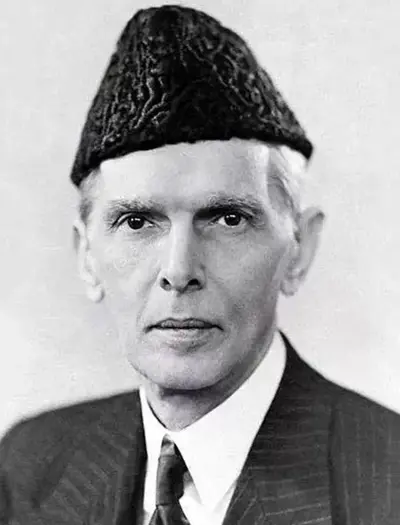
Muhammad Ali Jinnah was a barrister, politician and the founder of Pakistan. Jinnah served as the leader of the All-India Muslim League from 1913 until the inception of Pakistan on 14 August 1947, and then as the Dominion of Pakistan's first Governor-General until his death. He is revered in Pakistan as the Quaid-i-Azam ("Great Leader") and Baba-i-Qaum ("Father of the Nation"). His birthday is observed as a national holiday in Pakistan.
