Muhammad Ali Jinnah Quotes
You are free; you are free to go to your temples, you are free to go to your mosques or to any other place or worship in this State of Pakistan. You may belong to any religion or caste or creed - that has nothing to do with the business of the State.
Jinnah, Muhammad Ali. Quaid-i-Azam Mohammad Ali Jinnah: Speeches and Statements as Governor-General of Pakistan, 1947-1948. Government of Pakistan, Ministry of Information and Broadcasting, 1989, p. 46.

This book is endorsed by major religious organizations of all faiths as well as National School Boards Association, National Education Association, National PTA, National Association of Secondary School Principals, National Association of Elementary School Principals, American Association of School Administrators and others. It is used as a guideline by most schools systems in the United States.

Abdul Rahman, Afghan citizen, had converted from Islam to Christianity 16 years before. Conversion from Islam is a capital crime under Sharia Law which was the law of Afghanistan even after the Taliban had been overthrown. He was jailed and threatened with death. Statements like this and others made directly to the government persuaded the Afghan politicians to go against their mullahs who demanded the death penalty as is proscribed by Islamic Law—Sharia. The judges tried to get Rahman to recant and he would not (see {589518}). So they finally decided that he must be mentally insane and therefore could not be tried, and the problem was solved that way.


Jinnah, although insisting on a Muslim state, was a modernist and assumed that there would be freedom of religion. To a certain extent he believed in separation of church and state. However, after his death Pakistan has moved ever further towards a strict adherence to Sharia and Islamic law.


This publication was one of the best selling in the entire history of America. Rarely has a single publication been read by as high a proportion of a population. Those who support the maintenance of a strict separation of Church and State in America often point to this quotation and the popularity of Common Sense as evidence that not only were the founding fathers in favor of strict separation but so was the general Colonial American public.


France, like the other European nations had suffered through the bloodbaths and civil and other wars including the Protestant Reformation, the Holocaust and others. They. like the Untied States chose a separation of church and state—a secular government to combat the inner and intrareligious bloodbaths that have historically killed millions.

The same phrase was used by Count de Montalembert at a Catholic conference in Malines, August 20, 1863, and is sometimes attributed to him.
This book is endorsed by major religious organizations of all faiths as well as National School Boards Association, National Education Association, National PTA, National Association of Secondary School Principals, National Association of Elementary School Principals, American Association of School Administrators and others. It is used as a guideline by most schools systems in the United States.


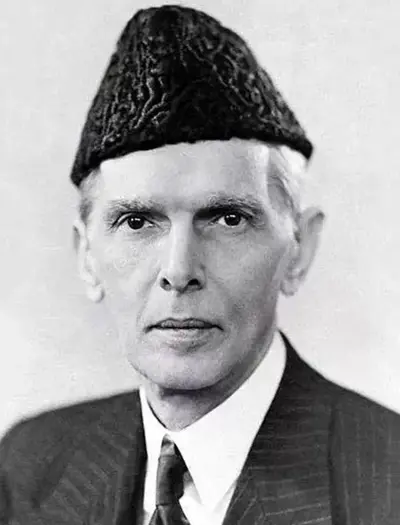
Muhammad Ali Jinnah was a barrister, politician and the founder of Pakistan. Jinnah served as the leader of the All-India Muslim League from 1913 until the inception of Pakistan on 14 August 1947, and then as the Dominion of Pakistan's first Governor-General until his death. He is revered in Pakistan as the Quaid-i-Azam ("Great Leader") and Baba-i-Qaum ("Father of the Nation"). His birthday is observed as a national holiday in Pakistan.
