Stephen Lucius Gwynn Quotes
Irish Protestants as a whole liked self-government for Ireland when government was placed exclusively in Protestant hands, as was the case under the Irish Parliament of the eighteenth century. But the increasing pressure of the partially enfranchised Catholic majority frightened their leaders into accepting the Act of Union, and in the nineteenth century Irish Protestants learnt to accept the Union as the one possible guarantee against Catholic ascendancy in Ireland.
Stephen Lucius Gwynn, 1864–1950, Irish journalist, Protestant Nationalist Politician, Member of the British Parliament, “Ireland, One and Divisible”, Foreign Affairs, December 1924
Sourced by: Eigen's Political and Historical Quotations

There has been a similar demographic condition since.

A force of 4,000 Spaniards, aided by Irish Catholics attempted to thwart the English Protestant Reformation forces in Ireland. They were defeated in their war by Lord Mountjoy. This is one of the many wars in history that was described as “holy” by one or both of its participants.

Protestant ascendancy was the policy of keeping Protestants dominant while allowing Catholics to worship but to be politically, socially, and economically subservient to the Protestants.

Many Protestant Englishmen were shocked to hear this, having little familiarity with the details of the functioning of the Church of England—the Established Church of Great Britain—in Ireland and the contribution of the Church to the discrimination against Irish Catholics and the poverty of Ireland.

This special collection brought in the huge sum of 300,000 Guilders. The Protestants in Catholic Ireland were persecuted as were the Catholics in most Protestant dominated lands. The Vatican raised money and armies to strengthen the hand of Catholic states and to foment revolution in Protestant states. Some of the protestant churches used the same methods to “interfere in the internal affairs of other countries” however. The early Americans were well aware of this history of religious struggles to become the State Religion, and this was one of the reasons they wrote the First Amendment. Without it and the others in the Bill of Rights, there would have been no ratification of the Constitution.


The founders were all Irish Protestants. Yet in their initial charter, they called for proportional representation of Roman-Catholics. Not all the relations between Irish Catholic and Protestants were hostile. There was a commonality in their Irish nationality and many protestants—especially the educated and more sophisticated—were opposed to the restrictions imposed by England on the rights of the Roman Catholic to practice their religion or participate in government. See {639279} for another example.
Not all the relations between Irish Catholic and Protestants were hostile. There was a commonality in their Irish nationality and many protestants—especially the educated and more sophisticated—were opposed to the restrictions imposed by England on the rights of the Roman Catholic to practice their religion. See {639274} for another example.


He was addressing the Conservatives of Ulster, the Northern Ireland province that was the center of the Orangemen movement of Irish Protestants who were fighting to retain 'Protestant Ascendency' -- which was the social, political and cultural domination of the Protestants (the minority) over the Catholics (the majority). This was best achieved by keeping Ireland a part of Great Britain as opposed to having Ireland as a separate, independent country.
It did sweep the polls. The Protestant Unionists won 40 seats; Sinn Fein and the Nationaists won only 6 each.

A delegation from Sinn Fein, headed by Arthur Griffith and Michael Collins, had negotiated a treaty of Irish Independence except that it did not cover Northern Ireland where the majority of the people wanted to stay a part of Britain. For 700 years, the Irish had fought for independence, and finally they got it for the vast majority of Ireland and the overwhelming majority of the Catholics of Ireland. The alternative to agreeing to the treaty was to continue the war between the IRA and the British Troops. At the time, the IRA was just about totally beaten and probably could not hold out another month. De Valera, a very shrewd politician, as the leader of Sinn Fein (and the IRA) would normally have headed the Irish Delegation. But he chose not to because he realized that they would never get independence for all 32 counties of Ireland as the British would not leave the Northern Ireland Protestants to their fates against their will. The best Ireland could get was Independence for all of Catholic majority Ireland. And he knew that public opinion would oppose giving up even one county becuse that was what the leaders had told the people for years. So De Valera let his two associates take the popular blame after he denounced the treaty with his famous quotation. Shortly after that, Michael Collins, the brilliant military Commander of the IRA who signed the treaty was assassinated. To many, it was as if De Valera had pulled the trigger. The treaty was ratified by a single vote by the Dail as there was no army left to fight, and the angry Irish electorate voted for De Valera as Ireland’s first President. The politician won; the patriot died.

This is an excellent example of the many public insults that the Irish religious leaders hurled at each other exacerbating the intercommunal tension between the Catholics and Protestants. There were amost no Irish leaders of either religion who tried to dampen the animosity and conflict.
Orangemen were the ulta Protestant Nationalists of Northern Ireland. Both Protetants and Catholics had their extremists who publicly spewed their hate, desire for exclusivity, and insults with little moderation from moderates who always risked retaliation from the extremists even of their own religion, not unlike the situation of the beginning of the 21st century, where Muslim moderates were cowed and intimidated by the religious Islamic extremists.
The boycott had been triggered by a breakup of a mixed marriage where the Protestant wife took her two children to Belfast and would only reunite with her husband if he agreed to bring up the children as Protestants. This brought Catholic accusations of a Protestant conspiracy and plot to kidnap Catholic Children and take them to Northern Island to be brought up as Protestants. The boycott soon ended as it was too unfair for all but the most rabid Anti-protestants.
The boycott had been triggered by a breakup of a mixed marriage where the Protestant wife took her two children to Belfast and would only reunite with her husband if he agreed to bring up the children as Protestants. This brought Catholic accusations of a Protestant conspiracy and plot to kidnap Catholic Children and take them to Northern Island to be brought up as Protestants. The boycott soon ended as it was too unfair for all but the most rabid Anti-protestants.


the Protestants & the Catholics 1st Earl of Oxford

This is a description of a massacre of Protestants (mostly English) by Catholic Rebels led by Phelim O’Neill. The Catholics whose religion had been compromised when English King Henry VIII severed all ties to the Pope and the Vatican and bound the Irish to that decision of his. The Irish Catholic peasants so resented the English that their hate caused massacres like this in the Irish Rebellion of 1641. Their anger was so great that Phelim O’Neill and his officers lost control of their troops who were bent on revenge.
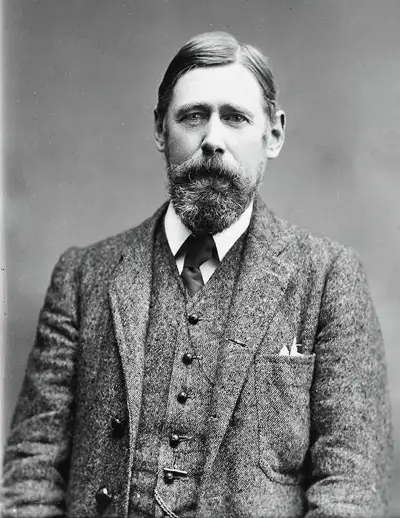
Stephen Lucius Gwynn was an Irish journalist, biographer, author, poet and Protestant Nationalist politician. As a member of the Irish Parliamentary Party he represented Galway city as its Member of Parliament from 1906 to 1918. He served as a British Army officer in France during World War I and was a prominent proponent of Irish involvement in the Allied war effort. He founded the Irish Centre Party in 1919, but his moderate nationalism was eclipsed by the growing popularity of Sinn Féin.
