Thomas Hobbes Quotes
Intemperance is naturally punished with diseases; rashness, with mischance; injustice; with violence of enemies; pride, with ruin; cowardice, with oppression; and rebellion, with slaughter.
Hobbes, Thomas. Leviathan. Edited by Richard Tuck, Cambridge University Press, 1991, p. 254.


The revolution turned on many of its initiators including Vergniaud. He was guillotined along with other Girondists.


A Cossack revolt had broken out in 1707 and was put down by the Czar’s forces. He then issued what might be one of the first official orders for genocide. Few Cossacks survived.


After the Russian Revolution he fought both the Whites and the Reds. He finally lost to the Reds and was banished. Both the Red and White armies went on pogroms and attacked Jews. The Whites were the worst and did so with the complicity of their officers by and large. The Reds, under Symon Petliura issued orders {617892} against pogroms but didn’t enforce it much. Makhno’s troops had some minor anti-Semitic activity but he disciplined them harshly. Specifically he had them shot. None the less, the few incidents were publicized by both the Reds and the Whites who were themselves engaged in the worst anti-Semitic behavior used their exaggeration as propaganda against Makhno and his army.

Head of the Sikh Religion. None of his predecessors had used arms, but he not only did so but often wore two swords representing the spiritual and civil domains.


Earlier, his father had also castigated the ministers over their inept hard-line handling of the American Revolution. See {641505} .

In the digital technology era, the personal computer enabled tens of thousands of young people to become highly skillful at computer technology. Some of them tended to disagree with the government or protest areas of society using the technology to learn information of to communicate their ideas to the world. The government authorities did not have many people who were in the same technological class and very frequently authorities with virtually unlimited resources to protect government secrets or government facilities were embarrassed by being outsmarted by usually young people with little or no resources. When the authorities were embarrassed, they tended to arrest the “hacktivists” and charge them with very serious crimes—far greater or trumped up from no crime at all, in order to punish the hacktivists and discourage others.

government appointed officials and bureaucrats Savonarola was a very hated ruler, opposed to any kind of a Parliament or assembly. And the penalty for advocating for a Parliament was severe. The Signoria were the various government appointees and clerks. They were influential in Florence and hence they were silenced by the mot draconian methods. There was a movement throughout Italy for parliaments and less arbitrary government. Savonarola was particularly strict in his rooting out sin and cruel in his punishments and hence very unpopular. He was also under the delusion that God himself had called on him to preach his strict version of morality. Some of the Nobles reached the Pope with many of Savonarola’s extreme statements and Savonarola was excommunicated and burned as a heretic. His executioner gloated that he was burning Savonarola before the powerful priest could burn him as he had done so many others.


The moral imperative of submission rather than allowing a war started by the aggressor, logical for Pizarro and Church leaders of the time, is the same logic of aggressors from Adolf Hitler to Saddam Hussein.


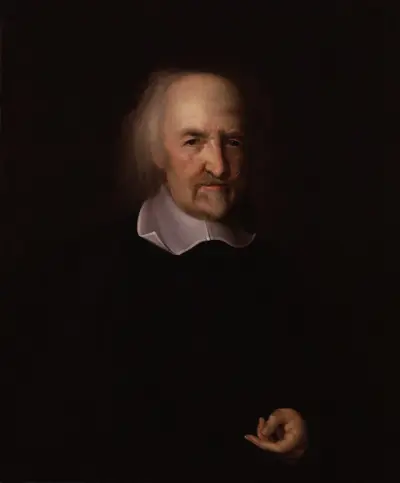
Thomas Hobbes was an English philosopher, considered to be one of the founders of modern political philosophy. Hobbes is best known for his 1651 book Leviathan, in which he expounds an influential formulation of social contract theory. In addition to political philosophy, Hobbes contributed to a diverse array of other fields, including history, jurisprudence, geometry, the physics of gases, theology, and ethics, as well as philosophy in general.
