Eleanor Roosevelt Quotes
… industrial progress has frequently consolidated industry in the larger centers, leaving the people in small towns without a method of obtaining a cash income.
The problem she described has generally not been solved. The only thing that saved most of rural America is the remarkable increase in agricultural productivity, but that has become so good that farming requires fewer and fewer workers each year and migration to the cities has continued since before WWII. However to avoid higher city wages, unionization, higher taxes, and higher energy costs, many industrial operations deliberately moved to small or medium sized after WWII, and many communities then became one company towns. Then the companies would relocate elsewhere if the mover would save some costs, and the small towns who did get factories were again in the predicament that Mrs. Roosevelt describes. In the 1980s, off shoring eliminated the major job source for thousands of small towns and cities as well. Some cities and suburban areas attracted knowledge industry companies and jobs, but the small town problem is in much of America just as it was when Mrs. Roosevelt wrote this in her column in 1936.
Eleanor Roosevelt, 1884-1962, First Lady (Franklin Delano Roosevelt), U. S. Delegate to the United Nations, Column, My Day, January 17, 1936
Sourced by: Eigen's Political and Historical Quotations

Spengler and some others viewed with alarm the urban migration that had come with the industrial revolution. That migration was relatively minor compared to what took place in the remainder of the 20th century. In most developed coutries the rural population has become very small and the urban and suburban totally dominant.

George was one of the first people to notice that with all the great development and technological breakthroughs, it does not become easier for the lower educated people in society to earn a living. He had not totally focused on education but made the observation for the lower classes where there is a high correlation with education.


Arguing that Slavery inhibited a society from development ...


The companies that pay well usually compete for highly talented people who want more than a good salary to move to a particular community.

Howard was one of the first people to recognize the migration from the country to the cities brought about by the Industrial Revolution and then suggest solutions. He advocated planned suburban communities that had some elements of the country, but allowed a density of people to function in an industrial economy. He called them “Garden Cities”. Forest Hills in New York and other American planned communities were much influenced by his thinking as were many other new communities since.
After traveling thorugh Virginia which was then the wealthiest and most developed of the slave states, he wrote ...


Cahokia was a very large Native American city just across the Mississippi River from St. Louis. In 1250, its population was about 15,000, comparable to that of London or Paris during the same period. At the time of the American Revolution, it was larger than New York, Boston of Philadelphia having 40,000 inhabitants at its peak. Tiahuanaco was a large city—30,000 at its peak—in Bolivia. The very ability to create and sustain such large communities shows that the Indians of the Americas were not simply hunter-gatherers but were very sophisticated in manipulating their environment and organizing large numbers of people.


One of the arguments in favor of machinery and automation has always been that new and better jobs are created for the people who run and maintain the machines. However as Marx observed in 1867 that is of no comfort to the person who is replaced by the machine. Also with the computer and modern robots, the control and operation is often done by another computer. Even much of the computer programming is done by computer.


In the 19th century, most socialists thought that the government was the major creator of jobs. In the 20th century, most socialists acknowledged that jobs could emanate from both the public and private sectors. Here in the 21st century, one of the world’s leading socialists, stated that private companies were necessary for full employment.
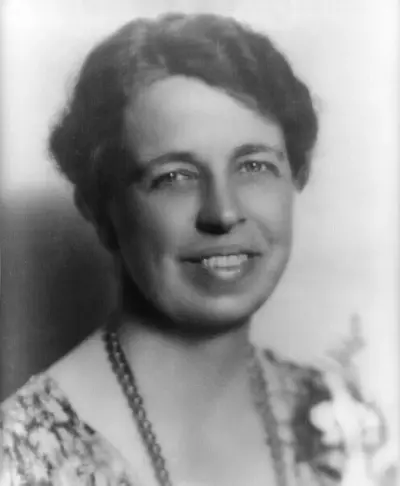
Anna Eleanor Roosevelt was an American political figure, diplomat and activist. She served as the First Lady of the United States from March 4, 1933, to April 12, 1945, during her husband President Franklin D. Roosevelt's four terms in office, making her the longest-serving First Lady of the United States. Roosevelt served as United States Delegate to the United Nations General Assembly from 1945 to 1952. President Harry S. Truman later called her the "First Lady of the World" in tribute to her human rights achievements.
