Peter Drucker Quotes
Industrialization divorces the family from society. The place of business moves away from the place of residence: the father goes to work in the plant or in the office, miles away from the home. Wife and children are no longer integrated into the productive work. They may, indeed, have their own jobs and go to work themselves; but even if they should work in the same plant or the same office as the man of the family, they do not work as a family unit.
Peter Drucker, Management Expert, The New Society, 1949
Sourced by: Eigen's Political and Historical Quotations


The problem she described has generally not been solved. The only thing that saved most of rural America is the remarkable increase in agricultural productivity, but that has become so good that farming requires fewer and fewer workers each year and migration to the cities has continued since before WWII. However to avoid higher city wages, unionization, higher taxes, and higher energy costs, many industrial operations deliberately moved to small or medium sized after WWII, and many communities then became one company towns. Then the companies would relocate elsewhere if the mover would save some costs, and the small towns who did get factories were again in the predicament that Mrs. Roosevelt describes. In the 1980s, off shoring eliminated the major job source for thousands of small towns and cities as well. Some cities and suburban areas attracted knowledge industry companies and jobs, but the small town problem is in much of America just as it was when Mrs. Roosevelt wrote this in her column in 1936.


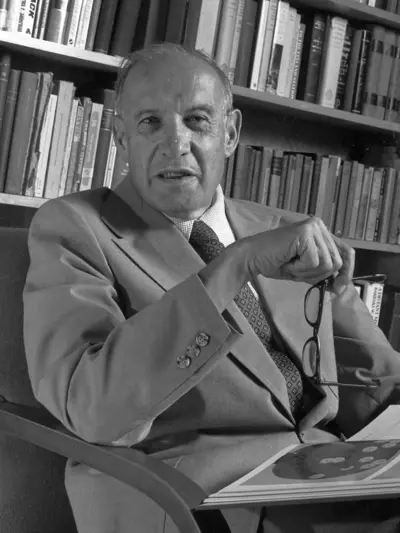
Peter Ferdinand Drucker was an Austrian management consultant, educator, and author, whose writings contributed to the philosophical and practical foundations of the modern business corporation. He was also a leader in the development of management education, he invented the concept known as management by objectives and self-control, and he has been described as "the founder of modern management".
