Oswald Spengler Quotes
Long, long ago the country bore the country-town and nourished it with her best blood. Now the giant city sucks the country dry, insatiably and incessantly demanding and devouring fresh streams of men, till it wearies and dies in the midst of an almost uninhabited waste of country.
Spengler and some others viewed with alarm the urban migration that had come with the industrial revolution. That migration was relatively minor compared to what took place in the remainder of the 20th century. In most developed coutries the rural population has become very small and the urban and suburban totally dominant.
Oswald Spengler 1880–1936, German historian, philosopher and political writer, The Decline of the West, 1918
Sourced by: Eigen's Political and Historical Quotations

Howard was one of the first people to recognize the migration from the country to the cities brought about by the Industrial Revolution and then suggest solutions. He advocated planned suburban communities that had some elements of the country, but allowed a density of people to function in an industrial economy. He called them “Garden Cities”. Forest Hills in New York and other American planned communities were much influenced by his thinking as were many other new communities since.


The problem she described has generally not been solved. The only thing that saved most of rural America is the remarkable increase in agricultural productivity, but that has become so good that farming requires fewer and fewer workers each year and migration to the cities has continued since before WWII. However to avoid higher city wages, unionization, higher taxes, and higher energy costs, many industrial operations deliberately moved to small or medium sized after WWII, and many communities then became one company towns. Then the companies would relocate elsewhere if the mover would save some costs, and the small towns who did get factories were again in the predicament that Mrs. Roosevelt describes. In the 1980s, off shoring eliminated the major job source for thousands of small towns and cities as well. Some cities and suburban areas attracted knowledge industry companies and jobs, but the small town problem is in much of America just as it was when Mrs. Roosevelt wrote this in her column in 1936.


In most of the world there has been a continual migration into cities.


Western populists were terribly suspicious of the cities. Note that the migration to cities was noticeable enough to be considered a problem. Better roads and the railroads made relocation easier.


Cahokia was a very large Native American city just across the Mississippi River from St. Louis. In 1250, its population was about 15,000, comparable to that of London or Paris during the same period. At the time of the American Revolution, it was larger than New York, Boston of Philadelphia having 40,000 inhabitants at its peak. Tiahuanaco was a large city—30,000 at its peak—in Bolivia. The very ability to create and sustain such large communities shows that the Indians of the Americas were not simply hunter-gatherers but were very sophisticated in manipulating their environment and organizing large numbers of people.

Roosevelt thought like Jefferson that it was not desirable to have a large proportion of the population residing in cities, and one of the more successful aspects of the New Deal with the improvement of conditions in rural America. Despite that, the trend to the cities was inexorable in America with the rest of the world following that trend.

Urbanization has often alarmed the power structure. Given the harsher form of urban poverty compared with rural poverty, it was hard for politicians to understand the draw of the cities. They did not then understand the value and importance of greater opportunity, greater privacy and anonymity, more choice and more de facto freedom. Bannerman and many others would have been totally surprised that in the second decade of the 21st century, more than half the people in the entire world were living in cities and suburbs.


Arguing that Slavery inhibited a society from development ...


This is a counter-intuitive fact which surprises almost everyone. Note that he does not claim that the entire world population could all live in New York, but the enormous amount of indoor space is clearly illustrated by the fact that all could fit in to the city.
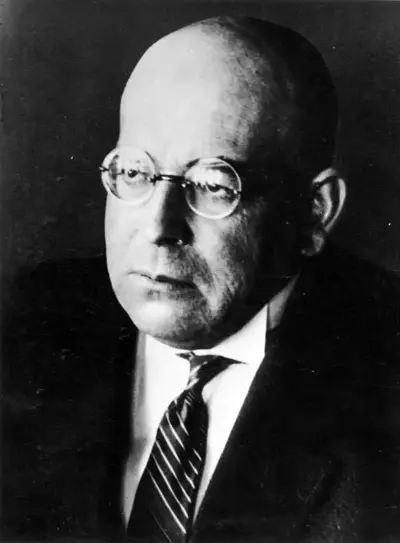
Oswald Manuel Arnold Gottfried Spengler was a German historian and philosopher of history whose interests included mathematics, science, and art and their relation to his organic theory of history. He is best known for his two-volume work, The Decline of the West (Der Untergang des Abendlandes), published in 1918 and 1922, covering all of world history. Spengler's model of history postulates that any culture is a superorganism with a limited and predictable lifespan.
