James Baird Weaver Quotes
The tendency is away from the farm and away from the rural districts ; the trend is toward the city, where the needy congregate and where crime becomes organized and where the Republic is stabbed
Western populists were terribly suspicious of the cities. Note that the migration to cities was noticeable enough to be considered a problem. Better roads and the railroads made relocation easier.
James Baird Weaver, 1833–1912, U. S. Congressman (Greenback Party, IA), Twice Presidential Candidate (Greenback Party and then The People’s Party (Populists), 1886
Sourced by: Eigen's Political and Historical Quotations

Urbanization has often alarmed the power structure. Given the harsher form of urban poverty compared with rural poverty, it was hard for politicians to understand the draw of the cities. They did not then understand the value and importance of greater opportunity, greater privacy and anonymity, more choice and more de facto freedom. Bannerman and many others would have been totally surprised that in the second decade of the 21st century, more than half the people in the entire world were living in cities and suburbs.


Spengler and some others viewed with alarm the urban migration that had come with the industrial revolution. That migration was relatively minor compared to what took place in the remainder of the 20th century. In most developed coutries the rural population has become very small and the urban and suburban totally dominant.


Howard was one of the first people to recognize the migration from the country to the cities brought about by the Industrial Revolution and then suggest solutions. He advocated planned suburban communities that had some elements of the country, but allowed a density of people to function in an industrial economy. He called them “Garden Cities”. Forest Hills in New York and other American planned communities were much influenced by his thinking as were many other new communities since.


Note that under the rubric of protecting children, this organization was advocating the forced sterilization of people who their primitive and unreliable instruments and biases determined were “feeble minded”. Although many states actually did this for a few decades with the conservative Supreme Court approval at the time, and the gross immorality, the method of forced sterilization is genetically flawed and did not even work to achieve their own objectives. Also not their “image” of the “feeble minded” that appeared on the cover of this report. Virginia did not repeal their law mandating forced sterilization until 1974.

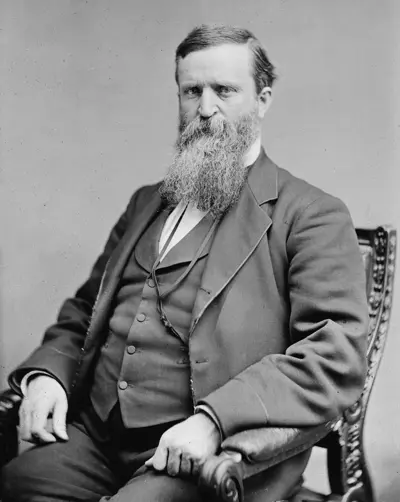
James Baird Weaver was a member of the United States House of Representatives and two-time candidate for President of the United States. Born in Ohio, he moved to Iowa as a boy when his family claimed a homestead on the frontier. He became politically active as a young man and was an advocate for farmers and laborers. He joined and quit several political parties in the furtherance of the progressive causes in which he believed. After serving in the Union Army in the American Civil War, Weaver returned to Iowa and worked for the election of Republican candidates. After several unsuccessful attempts at Republican nominations to various offices, and growing dissatisfied with the conservative wing of the party, in 1877 Weaver switched to the Greenback Party, which supported increasing the money supply and regulating big business. As a Greenbacker with Democratic support, Weaver won election to the House in 1878.
