Clarence Darrow Quotes
Industrial contests take on all the attitudes and psychology of war, and both parties do many things that they should never dream of doing in times of peace…. all parties in interest must be judged from that standpoint.
Clarence Darrow, 1857-1937, Attorney and author, Attributed
Sourced by: Eigen's Political and Historical Quotations


There were some anti-war forces in Germany in World War I.


The so called War on Terror had many lessons. President Obama and many of the military leaders in the Pentagon realized that just as we evolved the concept of a Cold War, a new concept was needed to deal on the long run with the Al Qaeda terrorists. Typically in war, the nation is fully mobilized with the surrender of the enemy the major objective. When peace is negotiated, there is some demobilization and other things begin to take precedence. However, given the non state highly decentralized nature of Al Qaeda, there is no way to ever negotiate peace because no Al Qaeda official can speak for any more than his immediate cell and cadre. They will likely never stop attacking in any foreseeable future since their motivation is ideological and religious. It doesn’t take full military mobilization to protect against individual acts of terrorism, and indeed arguably the large mobilization only gives the terrorists more nearby targets. So American leaders were evolving a state of high protection, surgical strikes and attacks on Al Qaeda leadership and cells, and at the same time a demobilization of many of the overseas ground troops. It is not a state of war yet there will be attacks from time to time against us and attacks by us on Al Qaeda, yet there cannot be an all out war which is de factor non winnable in toto, but is very controllable. For Stein and other hawks, this new state is unfathomable. If there is any attack on Americans or American interests to them we are either at war with full mobilization or have surrendered. The total number of American civillians killed in the 10 year war on terror has been less than 2 months of normal automobile crash deaths or 3 months worth of gun accidents, or one tenth of the deaths caused by flu in a single year.


In this case, he was referring to the situation with the Barbary Pirates who had an incredible extortion racket going in the Mediterranean. If nations would pay them an annual sum each year, they would not attack and seize merchant ships of that country and sell the ships and goods while holding the sailors for ransom. Jefferson favored and authorized war—a naval attack which for many reasons the European nations had not done (they just paid the tribute). Then a peace treaty was finally signed—the first American Treaty.


The English were at War with Napoleon and Denmark was neutral. British leaders feared that Denmark might either ally themselves with Napoleon or provide him with ships from their well equipped fleet. The English decided on a preemptive attack on Denmark and Paget and other Captains were ordered to Denmark. When they arrived they were ordered to bombard Copenhagen and force the Danes to surrender. When this happened, the British seized the Danish ships and simply took them as war prizes. The issues of the morality and wisdom of preemptive attacks, as with the Americans in the Iraq war, was thoroughly debated but the government view prevailed to the shame of most Englishmen.


While this was a common attitude for years before, the horrors of World War II produced a general revulsion to war and an awareness that war between two nations spills over to other states in the region and in an era of globalization, effects countries in other parts of the world. So there has been a tendency to use diplomacy endlessly, even after "things have gone too far". Historically, when things reached that point, the parties did fight it out, and when one was weakened sufficiently, negotiations and diplomacy could then be fruitful.


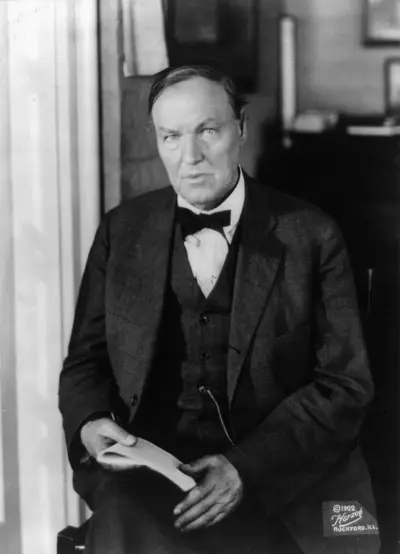
Clarence Seward Darrow was an American lawyer who became famous in the early 20th century for his involvement in the Leopold and Loeb murder trial and the Scopes "Monkey" Trial. He was a leading member of the American Civil Liberties Union, and a prominent advocate for Georgist economic reform.
