Ben Stein Quotes
Peace when the enemy is still attacking is not peace. It is surrender.
The so called War on Terror had many lessons. President Obama and many of the military leaders in the Pentagon realized that just as we evolved the concept of a Cold War, a new concept was needed to deal on the long run with the Al Qaeda terrorists. Typically in war, the nation is fully mobilized with the surrender of the enemy the major objective. When peace is negotiated, there is some demobilization and other things begin to take precedence. However, given the non state highly decentralized nature of Al Qaeda, there is no way to ever negotiate peace because no Al Qaeda official can speak for any more than his immediate cell and cadre. They will likely never stop attacking in any foreseeable future since their motivation is ideological and religious. It doesn’t take full military mobilization to protect against individual acts of terrorism, and indeed arguably the large mobilization only gives the terrorists more nearby targets. So American leaders were evolving a state of high protection, surgical strikes and attacks on Al Qaeda leadership and cells, and at the same time a demobilization of many of the overseas ground troops. It is not a state of war yet there will be attacks from time to time against us and attacks by us on Al Qaeda, yet there cannot be an all out war which is de factor non winnable in toto, but is very controllable. For Stein and other hawks, this new state is unfathomable. If there is any attack on Americans or American interests to them we are either at war with full mobilization or have surrendered. The total number of American civillians killed in the 10 year war on terror has been less than 2 months of normal automobile crash deaths or 3 months worth of gun accidents, or one tenth of the deaths caused by flu in a single year.
Benjamin [Ben] J. Stein, Presidential Assistant (Republican), Commentator, Commentary, CBS Sunday Morning, June 2, 2013
Sourced by: Eigen's Political and Historical Quotations


In this case, he was referring to the situation with the Barbary Pirates who had an incredible extortion racket going in the Mediterranean. If nations would pay them an annual sum each year, they would not attack and seize merchant ships of that country and sell the ships and goods while holding the sailors for ransom. Jefferson favored and authorized war—a naval attack which for many reasons the European nations had not done (they just paid the tribute). Then a peace treaty was finally signed—the first American Treaty.


General Grant had the fort surrounded and the confederate general hoped to surrender the fort and allow him and his men to leave to fight again some other day. This was often agreed to so the military objective would be gained without the casualties of a battle. However, Grant and Lincoln did not simply want to gain forts and territory. They wanted to end the war. Those Confederates who survived the battle were taken prisoner and were out of the fight.

Generally after civil wars there have been extensive reprisals and trials of the winning side against the losing one. Lincoln was determined that this pattern not be followed as the bloody war was coming to an end. Ironically, Andrew Johnson, Lincoln’s successor and a Southerner, was, together with some of the Radical Republicans, in favor of trying many of the Southern leaders for treason and rebellion. Lincoln’s view however and that of the moderate members of Congress prevailed. However, the Southern Whites generally would not comply with the Constitutional Amendments and laws regarding the role of the Negro, and Johnson was very sympathetic to their racism which led to a conflict between Johnson and Congress.

He was exactly right. Two decades later Germany had started WWII.

Kerry, a decorated, former Navy officer, was then a spokesperson for Vietnam Veterans Against the War.
Lee was trying to negotiate a peace treaty as a part of his his potential surrender. However, Grant would not be drawn into that, Lee was NOT the government of the Confederacy, and Grant had served with him earlier in the Mexican War and knew he was not a fanatic on teh subject of slavery and race as most of the Southern leaders were. They werenthe ones who would have to be captured or driven to surrender. Grant could have gotten authoirioty as he was in almost real time contact with President Lincoln by telegraph. However, neither wanted to negotiate peace with Lee. Instead, Grant gave Lee and his men incredibly gracious termsof surrender which he and Lincoln hoped would casue the avarage Southern soldiers to feel better about surrender for although Lee's was the largest Confederate Army, there were still others out there that had to be dealt with,


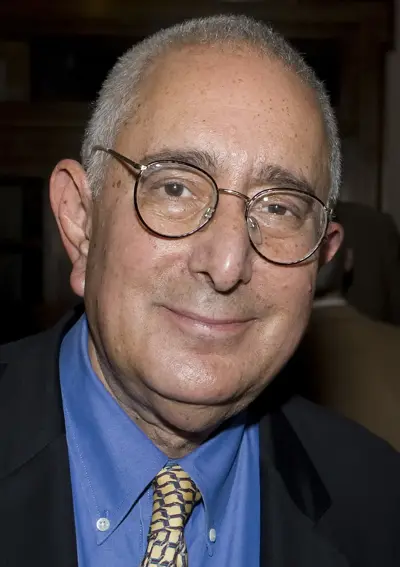
Benjamin Jeremy Stein is an American writer, lawyer, actor, comedian, and commentator on political and economic issues. He began his career as a speechwriter for U.S. presidents Richard Nixon and Gerald Ford before entering the entertainment field as an actor, comedian, and game show host. He is best known on screen as the economics teacher in Ferris Bueller's Day Off, as the host of Win Ben Stein's Money, and as Dr. Arthur Neuman in The Mask and Son of the Mask. Stein co-wrote and starred in the 2008 documentary Expelled, which portrays intelligent design creationism as if it were a scientifically valid alternative to Darwinian evolution and alleges a scientific conspiracy against those promoting intelligent design in laboratories and classrooms. Stein is the son of economist and writer Herbert Stein, who worked at the White House under President Nixon. As a character actor he is well known for his droning, monotonous delivery. In comedy, he is known for his deadpan delivery.
