William Hull Quotes
In a few days an officer came to our camp, under a flag of truce, and informed Hamilton, then a captain of artillery, but afterwards the aid of General Washington, that Captain Hale had been arrested within the British lines condemned as a spy, and executed that morning.
Hull, William. Revolutionary Services and Civil Life of General William Hull. Prepared by Maria Campbell, D. Appleton & Co., 1848, p. 37.

This is a very important quotation historically. There are a few historians and many politicians who claim that the rebellion of the South in the Civil War was motivated by a number of principles having little or nothing to do with slavery, while most historians have found that slavery was the only major issue. This quote further supports that view. This is the only Union General Officer would be executed if captured by the South. What crimes did he perform to warrant such exceptional treatment? He issued an order Emancipating the Slaves of the Southern Department of which he was the Commanding General. See {619331} . Lincoln quickly countermanded the order, but the act of freeing slaves was to the Southern government so heinous that it deserved the death penalty.


President Lincoln reversed this order. Most Northerners however sided with Burnside on this point. They saw little point to protecting traitors who were helping to kill their neighbors by encouraging the Southerners.

While most modern armies treat officers and enlisted men who desert equally or even favor the officers, the Visigoths made desertion by an officer the severest of crimes. A centurion was the officer in charge of 100 men. There were 10 decurians (leaders of 10) under him, They were the modern equivalent of the Sergeants—non-commissioned officers. Their penalty for desertion was only the paying of a heavy fine. It was the officers who had to set the example. This set of laws is the most formalized and sophisticated compendium of laws of the so-called “barbaric peoples” of Europe. The compilation was in many ways a documentation of the traditional laws of the Visigoths that had evolved over hundreds of years.


The names cited were the British police and military forces. Fraternization was considered spying and brought death. That year the IRA executed over 100 of their fellow Irishmen, with no trial or chance to defend themselves. Some were scores and personal grudges being settled and others mistakes.


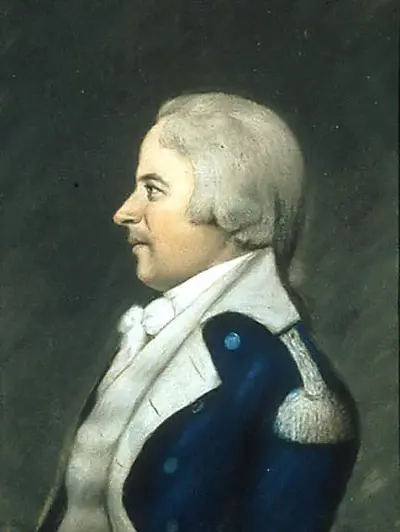
William Hull was an American soldier and politician. He fought in the American Revolutionary War and was appointed as Governor of Michigan Territory (1805–13), gaining large land cessions from several American Indian tribes under the Treaty of Detroit (1807). He is most widely remembered, however, as the general in the War of 1812 who surrendered Fort Detroit to the British on August 16, 1812 following the Siege of Detroit. After the battle, he was court-martialed, convicted, and sentenced to death, but he received a pardon from President James Madison and his reputation somewhat recovered.
