Irish Republican Army Quotes
Convicted Spy!!! The penalty for all who associate with Auxiliary Cadets, Black and Tans and IRC — IRA Beware
The names cited were the British police and military forces. Fraternization was considered spying and brought death. That year the IRA executed over 100 of their fellow Irishmen, with no trial or chance to defend themselves. Some were scores and personal grudges being settled and others mistakes.
Irish Republican Army, [IRA], Sign pinned on the body of an executed corpse, County Cork, Ireland, 1921
Sourced by: Eigen's Political and Historical Quotations

The woman was kidnapped from her home and shot.


He was shot in 1944 for his involvement in an attempt to kill Hitler

Harrison, then a young Captain, was concerned about the French, British and Spanish agents "plotting" in the United States:


Traitors and spies were their terms for Southern sympathizers in the Federal Government. Many of these would pass information to the rebels.


In 1937 four nationalist army columns were converging on Madrid in the Spanish Civil War. General Mola was asked which column would take Madrid. His reference to the sympathizers inside the city became a universal term for traitors.

Ironically, until after the assassination of JFK, the United States did not have a specific crime against killing the President.

Although it seems incredible to us today, thousands of people were arrested and prosecuted under the Espionage Act. The government particularly targeted leftists such as Eugene V. Debs, Bill Haywood, J. Philip Randolph, Victor Berger, John Reed, Max Eastman, and Emma Goldman. Debs was sentenced to 20 years in prison for criticizing the Act itself.


President Lincoln reversed this order. Most Northerners however sided with Burnside on this point. They saw little point to protecting traitors who were helping to kill their neighbors by encouraging the Southerners.


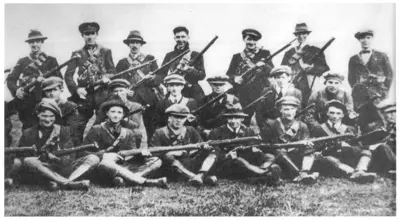
The Irish Republican Army (IRA) is a name used by various paramilitary organisations in Ireland throughout the 20th and the 21st centuries. Organisations going by this name have been dedicated to irredentism through Irish republicanism, the belief that all of Ireland should be an independent republic free from British rule. The original Irish Republican Army (often now referred to as the "old IRA") was raised in 1917 from members of the Irish Volunteers and the Irish Citizen Army, later reinforced by Irishmen (formerly in the British Army in World War I) who returned to Ireland to fight against Britain in the Irish War of Independence. In Irish law, this IRA was the army of the revolutionary Irish Republic as declared by its parliament, Dáil Éireann, in 1919. In the century that followed, the original IRA was reorganised, changed and split on multiple occasions, to such a degree that many subsequent paramilitary organisations have been known by that title – most notably the Provisional Irish Republican Army which was a key participant during the Troubles. The contemporary IRA organisations each claim the sole right to use that name, as they each insist they are the only legitimate descendants of the original IRA.
