William J. Casey Quotes
I don’t think we should be selling statues of Nathan Hale at the International Spy Museum. First of all, it was an operation against our allies, the British, but most important, it failed.
William J. Casey, 1913-1987, Director, CIA (Republican), Remark to Peter Earnest, Executive Director, International Spy Museum
Sourced by: Eigen's Political and Historical Quotations


during and after the American Revolution


This speech to over 100,000 people galvanized the Indian nationalists They had been asking the British to change the constitution to give India more independence. Churchill was opposed to any policy that would diminish the British Empire, but needed the Indians as men of India served in the British Army in every major theater of WWII. So instead of saying "No" Churchill held out the possibility but at a later time. He argued that it was inopportune to alter the Constitution in the midst of a world war.

“Lord Haw Haw” was the name that he used in his propaganda broadcasts from Germany to England. Despite the fact that the broadcasts were anti-British and pro German, many in Britain listened to him regularly. He was very witty and many of his criticisms of British society were views held by many patriots in Britain. As pure entertainment, he was better than most of the BBC broadcasts during WWII. At the end of the war, Joyce was captured, tried and executed for treason.
When she was a French Administrator in occupied Germany after WWII, there was constant spying on the French by the Americans and English and Vice Versa.

Christie was a Tory—a British supporter, but what he did that was so offensive was that he had requested that British Troops come to Maryland to control the rebellion.

As an educational and military leader, he saw the importance of each in a nation’s welfare.


This resolution was the trigger that began the debate which became the Declaration of Independence.

At the time of the American Revolution there were strong abolitionist forces working against slaver and the slave trade. Southern American slave-owners, the political leadership of the South, feared that England would force slavery reforms on their colonies. Hence, severance from England eliminated that threat. In retrospect, they were quite right for it was England which outlawed the slave trade and led the worldwide anti-slavery movement which had little effect on the new independent America and the political bias in favor of the south of the American compact caused slavery to survive in America, long after the vast majority of the population would have it ended. It took the Civil War to do it.


This resolution of independence was voted upon a month before the Declaration of Independence. It was approved by 12 of the colonies but not by New York. The Congress appointed a committee to draft what became the Declaration of Independence and that was approved by all the colonies. The resolution was introduced by Richard Henry Lee on instructions from Virginia. The graphic is of Lee’s original notes.

Harrison, then a young Captain, was concerned about the French, British and Spanish agents "plotting" in the United States:


The people of the American colonies were outraged by the Stamp Act which in effect placed a tax on almost everything operational in the economy at the time by making people buy government stamps to seal virtually all legal documents. Ingersoll had become the icon of the hated Stamp Tax collector holding what was then a very senior position in the Royalist government. The Sons of Liberty, today considered patriots, but then looked upon by the government as a groups of hooligan terrorists, caught up with Ingersoll and kidnapped him and took him to a house in Wethersfield. There he was roughed up and then given the choice of resigning his Stamp Act position or being hanged. He signed his resignation with this statement. The quotation and the incident is used by people who glorify the patriotism and the risk that the Sons of Liberty took for their beliefs. Others, use the quote and incident to illustrate that when such behavior occurs in countries today we often refer to it as terrorism such as in the Iraq War insurgency where the insurgents threatened government officials with death if the did not resign and often made good on their threat. A particular interesting historical story is Ingersoll’s son, Jared Jr. Unlike his Royalist father, young Ingersoll, Jared Jr., was an active patriot, serving in public office and was one of the signers of the U.S. Constitution.

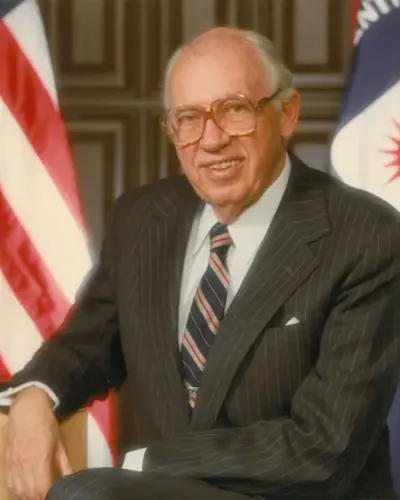
William Joseph Casey was the Director of Central Intelligence from 1981 to 1987. In this capacity he oversaw the entire United States Intelligence Community and personally directed the Central Intelligence Agency (CIA).
