Robert Bork Quotes
In a constitutional democracy the moral content of law must be given by the morality of the framer or legislator, never by the morality of the judge.
Robert Bork, U. S. Solicitor General, Judge, U. S. Court of Appeals, Washington DC, Quoted in The 1989 Conservative Calendar
Sourced by: Eigen's Political and Historical Quotations

See John Marshall's later (1803) use of the concept and term "repugnant." {606483}


This concept of balance of power and the equal role of the judiciary is actually quite rare. Even in Parliamentary democracies the parliament can override any court interpretation. In England, the upper legislative house, the House of Lords, actually serves as the nation’s highest or supreme court. And these “Law Lords” can override all regular judicial bodies.


Many of our Founding Fathers held the view that the Jurors should decide not only about the facts but also they have the final decision on the law. The concept of the jury not following the judge’s interpretation and instructions as to the law is called Jury Nullification of which many of the founders approved. In modern times however, most states require the jury to accept the judge’s instructions as to the law, and the Jury’s only role is to decide on the facts. Maryland is the only state left which allows the jury to make the final decision on the law as well as the facts. However, many jurors will silently nullify the Judges instructions and vote accordingly as jurors need not explain their reasoning in most jurisdictions. See {641742}, {590841}, {591140} & {591139} for similar views by other Founding Fathers.


Cummings was arguing against a Constitutional amendment. His alternative led to Roosevelt's court packing schema.


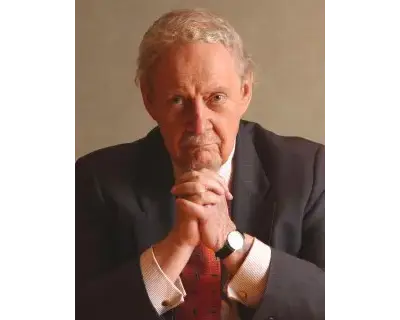
Robert Heron Bork was an American judge, government official, and legal scholar who served as the Solicitor General of the United States from 1973 to 1977. A professor at Yale Law School by occupation, he later served as a judge on the influential U.S. Court of Appeals for the D.C. Circuit from 1982 to 1988. In 1987, President Ronald Reagan nominated Bork to the U.S. Supreme Court, but the U.S. Senate rejected his nomination.
