Fiorello H. La Guardia Quotes
In 1920, at the height of one of the "Red scares," the New York State legislature voted to unseat five legally elected Socialist assemblymen:] The ballot is the legitimate weapon of the Socialists just as it is of the general public.
Fiorello H. La Guardia, 1882-1947, U. S. Congressman (Republican & Socialist, NY), New York City Mayor (Republican and Fusion Party), Statement, 1920
Sourced by: Eigen's Political and Historical Quotations


See {42210}, {626788}, {626784}. Palmer had been a potential Presidential candidate until his excesses ended that possibility.

Patrick Henry, a political opponent of Madison's, spread rumors in Madison's Virginia home district that Madison was perfectly satisfied with the Constitution as it was drafted. Madison felt the need to set the record straight, and this letter was widely circulated by his friends.

The marshal was embarrassed by his assignment to arrest this famous, elderly woman. He refused to handcuff her, gave her time to change her clothes, and took Anthony by streetcar to the courthouse trying to keep as low a profile as possible while Anthony was making speeches all the way about her unjust arrest. She was found guilty and fined $100 which she never paid.

Chodorov was one of the early Libertarians. In the midst of McCarthyism and the Red Scare of the 1950s, he was one of the few conservatives whose major issue was the size of government.

America is almost unique among nations in that the methods of elections are different in each state, but at the time even the right to vote was uniquely controlled by the states—even for Federal officials. Even in modern times individual states have controlled the right to vote in many instances. For example in some states convicted felons may not vote while in others they can.


There are many methods of voting in a legislative body. “Viva Voce” is Latin for “by Voice” and is often called a “Voice Vote”. Voting by ballot takes longer but had the advantage or disadvantage of secrecy. The theory was that if the New York Legislators could vote in a secret ballot, the lobbies and special interests would not be as influential since they would never know for sure—unless there were a unanimous vote—how any particular legislator voted. A further advantage is that Party Discipline could not be imposed and parties or “factions” as they were then called would be less powerful—a great concern of all the patriots who tended to distrust parties. The disadvantage was that the people who elected the legislator would never know how he voted. Note the frank admission that this was an “experiment”. Americans of the era realized that almost everything they were doing was a political experiment and this introduced a pragmatic force into structure and procedures of American politics.

McCarthy accused thousands of people of being communists and disloyal. He claimed to have lists of communists in universities, the Army and other agencies of government, but never produced such lists. In addition to being a overbearing demagogue, he suffered (and died from) from a serious case of alcoholism. McCarthy’s false and irresponsible attacks eventually caused the Senate to censure him. That and his drinking destroyed his career. Not a single person “exposed” by McCarthy was ever convicted of anything. Many had their careers destroyed however. A number of universities fired Professors because at an earlier phase of their careers, they had been a member of an organization that was communist or affiliated with communists, and then left. These firings led to intensive efforts to strengthen the rules of tenure and academic freedom so that the McCarthy abuses could never be repeated. McCarthy could not be sued for his defamatory lies as he always made his accusations from the floor of the Senate where there is absolute protection even for malicious and irresponsible statements.
Louis Napoleon had seized control of France and had very little popular support amongst the aristocracy and middle class. However, the Socialists leading the uprisings frightened them more than Louis Napoleon as the Socialists had the support of the peasants who resented the abuses of the aristocracy and many of the middle class. This was true class warfare and not at all what was possible in the United States when American conservatives would claim “class warfare” when there was a move for more progressive taxation. In Europe, class warfare really meant death and destruction, so for many who knew the history, the claim of “class warfare” was frightening and a large part of the “Red Scare” in the United States.


The Civil Rights Act of 1964 This is a classic example of a twisted logic what was used for many years in the 20th century Red Scare in America. The International Communist Party was critical of the United States legal racial segregation as it was one of the great weaknesses of U. S. Capitalism for most people in the world. The American Communist party also echoed the party line. Almost all socialist organizations supported the Civil Rights Bill as well. Therefore argued Russell and most Southerners, it should be opposed as a Communist effort to weaken America. What they did not mention was that the majority of Democrats and Republicans supported the bill. That the vast majority of all the American churches and other religious organizations supported the bill, that Business groups all across the country wanted legal segregation ended. The only reason there was a long debate is that the Southerners used the filibuster where a small minority could block Senate legislation. But the American majority was so great for civil rights that the filibuster was defeated and the law passed which changed America forever.

In the 1970s both England and America had a red scare here some ultra conservatives actually feared that their populations would adopt and vote for communism. The intelligence was so bad that the more the Soviet Union was financially and politically collapsing, the more they were feared.


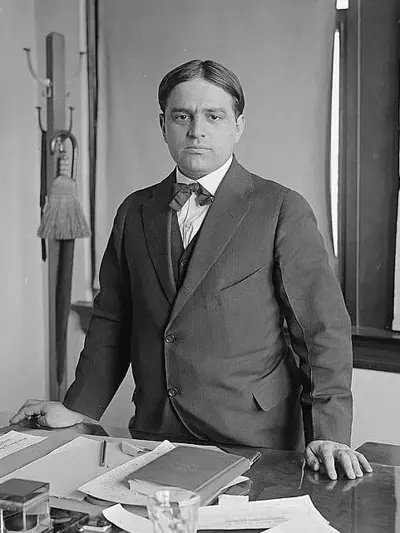
Fiorello Henry La Guardia was an American attorney and politician who represented New York in the House of Representatives and served as the 99th Mayor of New York City from 1934 to 1945. Known for his irascible, energetic, and charismatic personality and diminutive stature, La Guardia is acclaimed as one of the greatest mayors in American history. Though a Republican, La Guardia was frequently cross-endorsed by other parties, including the rival Democratic Party, under New York's electoral fusion laws.
