Maria Ressa Quotes
I'm not a criminal but I've been fingerprinted like a criminal.
Ressa, Maria. "Maria Ressa speaks out after arrest." Rappler, Rappler Inc., 14 Feb. 2019.


This quotation is a great example of the difficulty of deciding some of the major Constitutional issues. Most reasonable people believe that Rehnquist certainly has a point. On the other hand, critics observe that this quotation essentially says that it is OK to convict an innocent person if it cost too much or be too much trouble to do so. Reasonable people would also agree that this objection has much merit also. So the judicial system is stuck with deciding when the cost or trouble is too much. There will never, can never, be a clear cut answer.


Mistakes in the criminal justice system have been with us from the birth of the nation.

There were a number of anarchist organizations across the country and in New York that advocated anarchism. As Moss testified, one of the reasons that the anarchists found sympathizers and followers was the incompetence, corruption, and injustice of the courts. After the Page Commission report New York Courts began a reform and triggered similar court reform efforts throughout the country. Even today we have problems with overzealous or corrupt police or prosecutors who falsify or hide evidence, but the frequency is very small compared with what it was in the early 1900s.


The Senator was referring to the large number of people who had been exonerated by DNA evidence while on Death Row.

The exonerated based on the investigative work of some volunteer attorneys and law students. None of the miscarriages of justice were found or discovered by any law enforcement personnel, prosecutors, judges or officials of Texas. All the exonerated were released from jail where many had served decades for crimes they did not commit. 5 were released from Death Row—awaiting to be executed. Perry’s logic was that there was no problem because the 56 were released. For him, innocent people serving decades in Jail and sometimes waiting to be executed, did not constitute a problem. Of course, he assumed that the 56 cases of exhortation were the only cases of wrongful convictions in Texas. See {635340}.


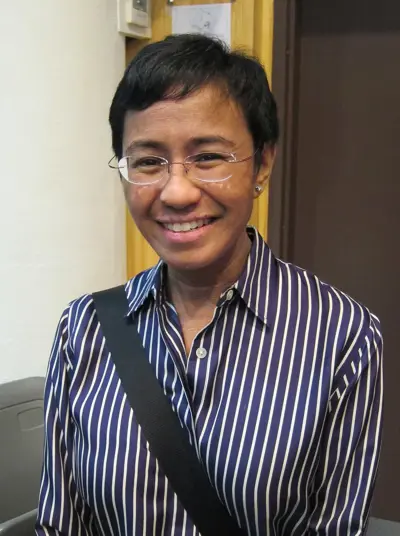
Maria Angelita Ressa is a Filipino-American journalist and author, the co-founder and CEO of Rappler. She previously spent nearly two decades working as a lead investigative reporter in Southeast Asia for CNN. In 2020, she was convicted of cyberlibel under the controversial Philippine Anti-Cybercrime law, a move condemned by human rights groups and journalists as an attack on press freedom.
