William Rehnquist Quotes
Due process does not require that every conceivable step be taken, at whatever cost, to eliminate the possibility of convicting an innocent person. To conclude otherwise would all but paralyze our system for enforcement of the criminal law.
This quotation is a great example of the difficulty of deciding some of the major Constitutional issues. Most reasonable people believe that Rehnquist certainly has a point. On the other hand, critics observe that this quotation essentially says that it is OK to convict an innocent person if it cost too much or be too much trouble to do so. Reasonable people would also agree that this objection has much merit also. So the judicial system is stuck with deciding when the cost or trouble is too much. There will never, can never, be a clear cut answer.
William Rehnquist, 1924–2005, Chief Justice, U. S. Supreme Court 1977
Sourced by: Eigen's Political and Historical Quotations


This quotation has become an operational principle of most justice systems of industrial democracies.

He was one of the few “national security hawks” who was willing to place this issue in the public table. In the 21st Century, there were some Muslims living in Democratic countries who were or had just become radical Islamic extremist jihadist by religious belief and philosophy. Some would preach or advocate violence in terrorism against Democracy and the west. Many of these people with radical Islamic beliefs would give material aid and comfort to terrorists and some would themselves engage in terrorist activities themselves. When they did, it was too late to prevent tragedies. So there was this population of emotional and intellectual terrorists who could act on their beliefs at any moment. These are what Hayden referred to as the “not yet guilty”. Preventive detention could protect against serious terrorist attacks. But the legal system of virtually every democracy had no legal bases to incarcerate or move against anyone for his/her beliefs or speech. Criminal charges required action other than thoughts, beliefs or speech. But by waiting until there is terrorist action, the law enforcement authorities give up the ability to prevent the terrorist action. Some were advocating changes in this fundamental and traditional distinction of law enforcement.


The exonerated based on the investigative work of some volunteer attorneys and law students. None of the miscarriages of justice were found or discovered by any law enforcement personnel, prosecutors, judges or officials of Texas. All the exonerated were released from jail where many had served decades for crimes they did not commit. 5 were released from Death Row—awaiting to be executed. Perry’s logic was that there was no problem because the 56 were released. For him, innocent people serving decades in Jail and sometimes waiting to be executed, did not constitute a problem. Of course, he assumed that the 56 cases of exhortation were the only cases of wrongful convictions in Texas. See {635340}.


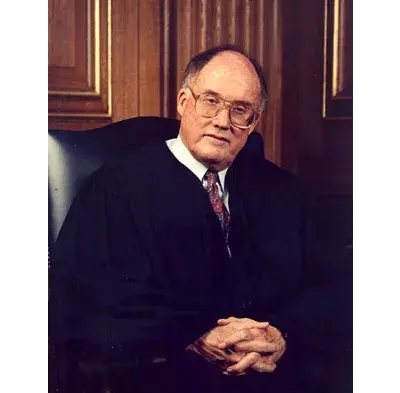
William Hubbs Rehnquist was an American lawyer and jurist who served on the Supreme Court of the United States for 33 years, as an associate justice from 1972 to 1986 and as Chief Justice from 1986 until his death in 2005. Considered a conservative, Rehnquist favored a conception of federalism that emphasized the Tenth Amendment's reservation of powers to the states. Under this view of federalism, the court, for the first time since the 1930s, struck down an act of Congress as exceeding its power under the Commerce Clause.
