Voltaire Quotes
It is better to risk saving a guilty man than to condemn an innocent one.
Voltaire. Zadig. Œuvres complètes de Voltaire, Vol. 21, Garnier Frères, 1879, p. 44.

This quotation has become an operational principle of most justice systems of industrial democracies.


This quotation is a great example of the difficulty of deciding some of the major Constitutional issues. Most reasonable people believe that Rehnquist certainly has a point. On the other hand, critics observe that this quotation essentially says that it is OK to convict an innocent person if it cost too much or be too much trouble to do so. Reasonable people would also agree that this objection has much merit also. So the judicial system is stuck with deciding when the cost or trouble is too much. There will never, can never, be a clear cut answer.


It is surprising that these ideas would come from one of the most autocratic powerful monarch in the world at the time. However there were many very liberal influences on her from Europe. This set of proposals she even sent to Voltaire to get his feedback and criticism.

Reaction to the indictments of several of his political associates who were subsequently convicted after this statement:


He was one of the few “national security hawks” who was willing to place this issue in the public table. In the 21st Century, there were some Muslims living in Democratic countries who were or had just become radical Islamic extremist jihadist by religious belief and philosophy. Some would preach or advocate violence in terrorism against Democracy and the west. Many of these people with radical Islamic beliefs would give material aid and comfort to terrorists and some would themselves engage in terrorist activities themselves. When they did, it was too late to prevent tragedies. So there was this population of emotional and intellectual terrorists who could act on their beliefs at any moment. These are what Hayden referred to as the “not yet guilty”. Preventive detention could protect against serious terrorist attacks. But the legal system of virtually every democracy had no legal bases to incarcerate or move against anyone for his/her beliefs or speech. Criminal charges required action other than thoughts, beliefs or speech. But by waiting until there is terrorist action, the law enforcement authorities give up the ability to prevent the terrorist action. Some were advocating changes in this fundamental and traditional distinction of law enforcement.


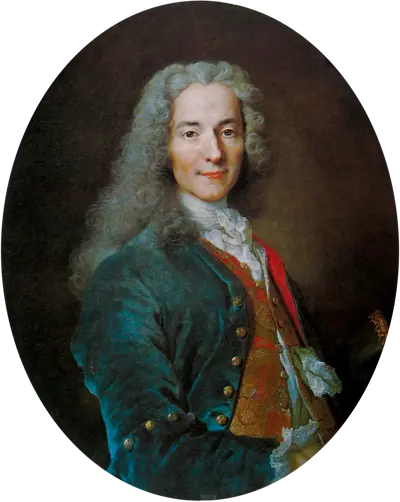
François-Marie Arouet, known by his nom de plume Voltaire (/vɒlˈtɛər, voʊl-/; also US: /vɔːl-/; French: [vɔltɛːʁ]), was a French Enlightenment writer, historian, and philosopher famous for his wit, his criticism of Christianity—especially the Roman Catholic Church—as well as his advocacy of freedom of speech, freedom of religion, and separation of church and state.
