J. Edgar Hoover Quotes
Law enforcement does not ask an advantage in its struggle with the lawless. It asks only that the scales of justice be balanced. The cause of justice is not served when hardened criminals are allowed to go free through legal technicalities.
J. Edgar Hoover, 1895-1972, Director, Federal Bureau of Investigation, Quoted in Katcher, Earl Warren: A Political Biography, McGraw Hill, 1967
Sourced by: Eigen's Political and Historical Quotations


This quotation is a great example of the difficulty of deciding some of the major Constitutional issues. Most reasonable people believe that Rehnquist certainly has a point. On the other hand, critics observe that this quotation essentially says that it is OK to convict an innocent person if it cost too much or be too much trouble to do so. Reasonable people would also agree that this objection has much merit also. So the judicial system is stuck with deciding when the cost or trouble is too much. There will never, can never, be a clear cut answer.


This interesting historical quotation illustrates the fact that in almost every American generation there are those who believe that society has gone too far in protecting the rights of criminal suspects at the expense of law and order in the general society. This is nothing new. This is a classic argument given by those who would deny a defendant the Constitutional protection against self-incrimination. The belief that an innocent man has nothing to fear from the police is refuted by the many cases of innocent men being convicted by evidence they have given in the belief that they were innocent, and served long jail sentences only to later be proved by DNA evidence that they could not possibly have been guilty. Since Nott’s day, society has not only found many cases where honest error was made by the police or prosecutors, but many where there was venal prosecutorial misconduct and defendants were jailed even though the authorities were aware of evidence of innocence and kept it secret. There have been a number of these cases where a defendant was on death row and about to be executed when it was found he was innocent. Probably there have been men wrongly executed. See {629444} for a probable example.

Owner of one of the only 2 Mexican Television Networks


Prosecutors, even ones who are frequent lawbreakers themselves violating defendant's rights or illegally manipulating trials, are reluctant to be officially found to have done so. Many politicians start their political careers as prosecutors and then rise to higher office. If it is officially found that they had abused a defendant and violated the law, it can be detrimental to their careers. So in many states, they have placed barriers making it much harder for an improperly convicted person to even get a court hearing. The cost to society however is that they are never accountable, and people have been wrongly imprisoned and cannot even get a hearing to prove that they were the victims of official misconduct. The rationale for these rules that prevent victims from obtaining fairness and justice is finality—the concept that there should be some end to the process of appeals so justice can be said to have been done. It prevents a kind of closure for many of the victims of crimes and their families if the guilty perpetrator is constantly appealing or can do so.


The United States is almost unique among nations in their respect. While there are Federal law enforcement officers, the number is very small. For example, the entire Federal Bureau of Investigation complement of agents is outnumbered by one of the three shifts of the New York City Police Department. The vast majority of the police officers in America are not even at the State level; it is at the local level.


This ruling upheld a military draft for males only. The logic was that men and women were dissimilar persons.

The exonerated based on the investigative work of some volunteer attorneys and law students. None of the miscarriages of justice were found or discovered by any law enforcement personnel, prosecutors, judges or officials of Texas. All the exonerated were released from jail where many had served decades for crimes they did not commit. 5 were released from Death Row—awaiting to be executed. Perry’s logic was that there was no problem because the 56 were released. For him, innocent people serving decades in Jail and sometimes waiting to be executed, did not constitute a problem. Of course, he assumed that the 56 cases of exhortation were the only cases of wrongful convictions in Texas. See {635340}.

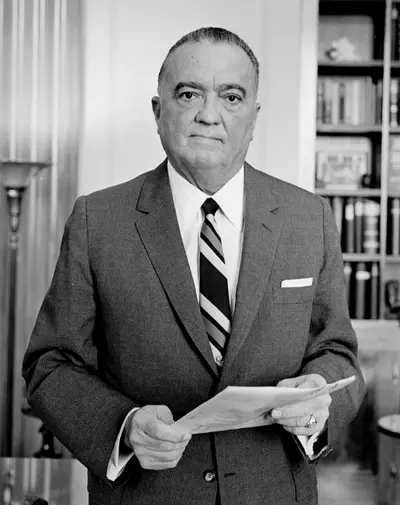
John Edgar Hoover was an American law enforcement administrator who served as the first Director of the Federal Bureau of Investigation (FBI) of the United States. He was appointed director of the Bureau of Investigation – the FBI's predecessor – in 1924 and was instrumental in founding the FBI in 1935, where he remained director for another 37 years until his death in 1972 at the age of 77. Hoover has been credited with building the FBI into a larger crime-fighting agency than it was at its inception and with instituting a number of modernizations to police technology, such as a centralized fingerprint file and forensic laboratories. Hoover is also credited with establishing and expanding a national blacklist, referred to as the FBI Index or Index List, renamed in 2001 as the Terrorist Screening Database which the FBI still compiles and manages.
