Charles Morgan Quotes
If Moses had gone to Harvard Law School and spent three years working on the Hill, he would have written the Ten Commandments with three exceptions and a saving clause.
Morgan, Charles, Jr. Quoted in The Oxford Dictionary of American Legal Quotations, edited by Fred R. Shapiro, Oxford University Press, 1993, p. 235.


On the Fugitive Slave Act: As one of the leading American Catholic intellectuals during the 19th Century, Brownson’s opinions went far in keeping Catholics from joining the side of the abolitionists. However, just a few years later his tone would change and he would become one of the few Catholic writers to refuse to defend slavery, see {610710}. While the majority of Catholics refused to join the abolition movement, they often did so because abolitionism was closely tied to anti-Catholicism, see Gordon {611392} or Shaftesbury {611106}. Other reasons included Irish immigrants fearful of competition from Black labor and the fear of liberal individualism and social disorder, which was prevalent in 19th century Catholic thought. For a further explanation on the relationship between American Catholics and slavery, see McGreevy {612036}.


It passed with 70 percent of the vote. It was triggered by a case in New Jersey where a Muslim man assaulted and raped his wife, and the Judge found that he did not have the “Criminal Intent” because he was brought up under Sharia law which allows a husband for beat a wife and force her to have sexual relations if she refused. The New Jersey appellate court overturned the judge’s decisions, but the Oklahoma advocates for the Question argued that this initiative would be sure that no judge in Oklahoma would make a similar judicial decision.


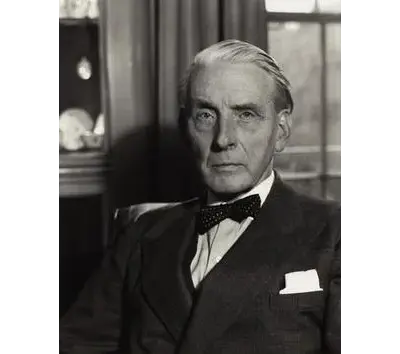
Charles Langbridge Morgan was a British playwright and novelist of English and Welsh parentage. The main themes of his work were, as he himself put it, "Art, Love, and Death", and the relation between them. Themes of individual novels range from the paradoxes of freedom (The Voyage, The River Line), through passionate love seen from within (Portrait in a Mirror) and without (A Breeze of Morning), to the conflict of good and evil (The Judge's Story) and the enchanted boundary of death (Sparkenbroke). He was the husband of Welsh novelist Hilda Vaughan.
