Amy Coney Barrett Quotes
In a system of precedent, the new majority bears the weight of explaining why the constitutional vision of their predecessors was flawed and of making the case as to why theirs better captures the meaning of our fundamental law.
Barrett, Amy Coney. "Precedent and Jurisprudential Disagreement." Texas Law Review, vol. 91, no. 7, 2013, p. 1727.


Cummings was arguing against a Constitutional amendment. His alternative led to Roosevelt's court packing schema.


From this quotation, {615902} and {615901} it is clear that the framers of the Constitution intended the treaty making powers to be shared by the President and the Senate. In practice, in modern times treaties are usually initially negotiated by diplomats under the supervision of the President and the Senate gets to concur or not in the ratification process. However, there have been a number of treaty failures including the League of Nations where the lack of coordination has resulted in a situation where the Senate had to accept or reject something which the President had negotiated and the Senate rejected the treaty.

This quotation is particularly important because it summarizes one of two opposite schools or thought regarding judicial interpretation of the Constitution that politicians have been arguing about since the Supreme Court first sat. The other is Original Intent where only the original intentions of the writers and ratifiers of the Constitution should be considered—assuming that it can be determined.


It is argued whether Scalia’s problem was that the Supreme Court was doing something new or radical or the country had changed. He had certainly lived through the greatest transformation of any society and culture on earth at a pace of change that far exceeds anything that has occurred before. Scalia is one who believes that the Constitution should not be interpreted in recognition of these changes, but should be immutable as it was written for the late 18th century. Most judges and legal scholars disagree and try to interpret the Constitution as the founders would have intended, knowing what we know, having the tools and powers we have, and facing the problems of the modern world. It represents a major legal and philosophical debate.


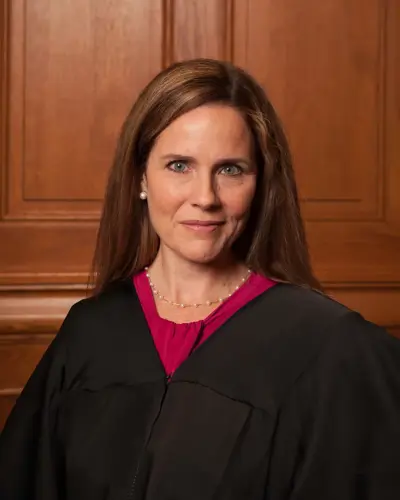
Amy Vivian Coney Barrett is an associate justice of the Supreme Court of the United States. She is the fifth woman to serve on the court. She was nominated by President Donald Trump and has served since October 27, 2020. She was a United States circuit judge on the United States Court of Appeals for the Seventh Circuit from 2017 to 2020.
