Stephen King Quotes
If I know anything, I know scary. And giving this President and this out-of-control Congress two more years to screw up our future is downright terrifying. Thankfully, this national nightmare is one we can end.
Stephen King, Novelist, Referring to George W. Bush, Quoted in The Gaggle, Newsweek, October 24, 2006
Sourced by: Eigen's Political and Historical Quotations

President George W. Bush, to justify the invasion of Iraq had told the public that the Iraqi regime was developing nuclear weapons and other weapons of mass destruction, and had participated in the September 11 attack on the United States by assisting Al Qaeda. It turned out that these statements were false. The administration claimed that their error was well intentioned and the result of faulty intelligence. Opponents claimed that the administration officials knew that they were exaggerating and had pressured the intelligence agencies to create intelligence conclusions that supported their story.

This was an insult to the George W. Bush administration which had stretched the Constitution more so than any previous administration, had asserted Presidential powers that had never been asserted before and had had several of its more controversial policies and practices overturned by the Supreme Court.


Dean had lived through the horrors of the Nixon Administration, so this was a very serious accusation from a Republican no less. By the end of the George W. Bush presidency, there were many Republicans who had repudiated Bush.


There have been many examples of Presidents in time of war who have asked Congress & received additional powers whose constitutionality was sometimes tested. The Alien & Sedition acts of the John Adams administration, Lincoln in the Civil War controlling the Southern governments, Wilson jailing people verbally opposing the draft, FDR incarcerating Japanese Americans in WWII. However, in those cases, the President asked for and got the powers from Congress. Nichols claimed that by Bush, just assuming powers, he was acting like a king & not a president, and that per se was an impeachable offence. As unpopular as Bush was, his Vice President was much moreso, & Bush was in his last term; neither party wanted to go through another impeachment after the Republican attempt to oust William Clinton ended in acquittal. Other constitutional scholars do not believe the “acting like a king” rises to the level of an impeachable offense; only specific “high crimes & misdemeanors” would qualify.


President George W. Bush, to justify the invasion of Iraq had told the public that the Iraqi regime was developing nuclear weapons and other weapons of mass destruction, and had participated in the September 11 attack on the United States by assisting Al Qaeda. It turned out that these statements were false. The administration claimed that their error was well intentioned and the result of faulty intelligence. Opponents claimed that the administration officials knew that they were exaggerating and had pressured the intelligence agencies to create intelligence conclusions that supported their story.

The reference was to President George W. Bush.


Bush, more so than any other president, claimed executive powers that had never been claimed by other presidents even in wartime. At the time the senator made this statement, the Supreme Court had ruled against the President on several of his claims and others were pending. The powers ranged from the right to hold even American Citizens incommunicado without filing any charges or going before a court or even allowing a court to review the action if the President Claims the person was an “enemy combatant” or “terrorist”; to the right to spy on American Citizens phone calls in America without any court review and even went so far as to claim the right to question Americans or other suspected enemies by methods that are classified as “torture” by most nations and is even illegal by the American Military Regulations for interrogating prisoners.

He was a Congressman at the time. The problem of legislating in an election year seems to have always been difficult.
The Congress over the last century has ceded much of its Constitutional power to the President. Congress has much power to check the President, but just as Congress has not been very competent at legislating, oversight, and conducting hearings and investigations, it has not organized itself to use the powers it has very well.

Obama was a President who believed deeply in the concepts of checks and balances and separation of powers. He did not punish members of Congress who opposed him by closing federal installations in their state of district, not giving government contracts to companies in his district and in the case of member of his own party who were “recalcitrant” supporting opponent in primary elections and failing to support in general elections. Presidents Nixon and Johnson used these techniques particularly effectively. As a result they pushed their legislative programs through Congress very effectively. All other modern Presidents have done this to one degree or another, but Obama did not. He believed that pressure on member of Congress should be limited to persuasion and public debate moving public opinion. Many seasoned politicians and political observers however thought that this was Obama’s biggest weakness as a President. Lyndon Johnson did not have to actually punish many member of Congress, as his willingness to do so was well known and thus few opposed him when he called or met with them and “gave them the treatment.” But Congress knew that Obama had taken punishment and retaliation off the table, and many opposed him including member of his own party.


He was responding to criticism that the media was bashing the President.

He was explaining his reasons for resigning in 2005 from the number two position in the Justice Department. The George W. Bush administration had implemented a program of secret wiretapping and surveillance of American citizens in America which required the authorization of the Justice Department which had determined that the program as it was being implemented violated the law. The Attorney General was ill in the hospital but had told Comey that he would not sign the authorization. The White House then pressured Comey to sign and he refused, and in a similar replay of the Watergate “Saturday Night Massacre”, the number three man at Justice would have been ordered to sign. His resignation convinced President Bush to alter the program to take account of the Justice Department objections.

Donald Trump had won the presdiency by winning a majority of the votes of the Electoral College. However his opponent Hillary Clinton garnered about 2 million more votes. Several other presidents have won with a minority vote. These occurances did not affect the Presidents' legitimacy as the Electoral College was specified in the Constitution, However, it did undercut the concept that the President had a mandate. Other presidents just carried on and either earded the respect of the majoprity of AMericans or did not over time. Howevewr, Trump, who was so sensitive and fragile about his image, kept responding to comedians like Bee by claiming that the only reason he lost the poular vote was voter fraud by illegal immigrants. However he never offered any evidence of such and there were no convictions for same or even arrests and trials.
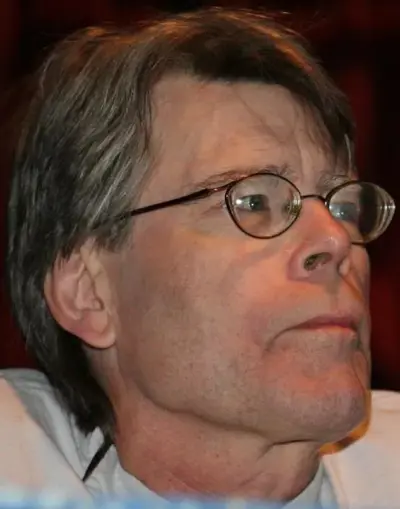
Stephen Edwin King is an American author of horror, supernatural fiction, suspense, crime, science-fiction, and fantasy novels. His books have sold more than 350 million copies, and many have been adapted into films, television series, miniseries, and comic books. King has published 62 novels, including seven under the pen name Richard Bachman, and five non-fiction books. He has also written approximately 200 short stories, most of which have been published in book collections.
