Calvin Coolidge Quotes
In their hours of timidity the Congress becomes subservient to the importunities of organized minorities that the President comes more and more to stand as the champion of the rights of the whole country.
Calvin Coolidge, 1872-1933, 30th President of the United States (Republican, MA), "The President Lives Under a Multitude of Eyes," American Magazine, August 1929
Sourced by: Eigen's Political and Historical Quotations


The Senator had introduced an amendment that would prohibit the President from attempting to influence members of Congress. It failed.


Forrestal was outraged when special interests and lobbies pressured Congress and the White House regarding the policies—especially the budget and spending policies of the Department of Defense. Ironically, he was accused of endangering national security by many—especially Southerners. He had racially integrated the Navy while Secretary of the Navy and as Defense Secretary he wanted to integrate the armed forces completely. The argument against integration was that unit cohesion and military effectiveness would decrease. If nothing else, large numbers of servicemen would not want to be in close proximity to Blacks and his would impair their military effectiveness. The same arguments were later made about the integration of women and then gays.


Adams was one of those who felt that the President and Vice President should have some Title of official respect like “Your Highness.” That was a very controversial issue at the time. See {586769}. However, most public opinion thought that was a throwback to monarchy. Adams was thereafter derided for being a monarchist.


Begala was commenting on a newspaper expose that President Bush had appointed over 100 lobbyists to administrative government posts in the area for which they had previously lobbied.


Liberia was founded by American Blacks who dominated the Government until Doe shot the President on Television and seized the government. He was a member of the majority Krahn tribe which wanted to control the government. Under Doe the Liberian economy collapsed and civil rights evaporated.


Compared to Most Democracies Canadian political power is shared between the Federal government and the provinces. As such the Prime Minister role in Canada is weaker than most heads of government.

The Congress over the last century has ceded much of its Constitutional power to the President. Congress has much power to check the President, but just as Congress has not been very competent at legislating, oversight, and conducting hearings and investigations, it has not organized itself to use the powers it has very well.

What makes this quotation even more meaningful was the fact that Truman had very little money, He didn’t own his own home, and his only income was a $ 13,507.72 a year Army pension. There was no presidential pension then, so forgoing the offer that has been customary for retired high office holders, was truly a great sacrifice.


This principle has been in force since the beginning of our republic. However, there was a suggested challenge to it by President Richard M. Nixon, and a substantial challenge by the George W. Bush Administration which took the position that as long as the President was engaged in carrying out a Constitutionally mandated function, like war or foreign policy, the President did not have to obey the existing laws and could direct his subordinates to violate the law. Bush lost in those areas which came to the courts and the Supreme Court made it clear that even the President, carry out his official duties, had no immunity from the laws of the nation.


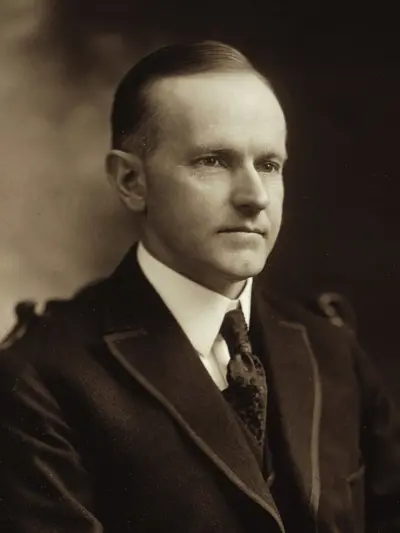
Calvin Coolidge was an American lawyer and politician who served as the 30th president of the United States from 1923 to 1929. A Republican lawyer from New England, born in Vermont, Coolidge worked his way up the ladder of Massachusetts state politics, eventually becoming governor of Massachusetts. His response to the Boston Police Strike of 1919 thrust him into the national spotlight and gave him a reputation as a man of decisive action. The next year, he was elected the 29th vice president of the United States, and he succeeded to the presidency upon the sudden death of Warren G. Harding in 1923. Elected in his own right in 1924, he gained a reputation as a small-government conservative and also as a man who said very little and had a rather dry sense of humor.
