James Forrestal Quotes
No group in this country should be permitted to influence our policy to the point it could endanger our national security
Forrestal was outraged when special interests and lobbies pressured Congress and the White House regarding the policies—especially the budget and spending policies of the Department of Defense. Ironically, he was accused of endangering national security by many—especially Southerners. He had racially integrated the Navy while Secretary of the Navy and as Defense Secretary he wanted to integrate the armed forces completely. The argument against integration was that unit cohesion and military effectiveness would decrease. If nothing else, large numbers of servicemen would not want to be in close proximity to Blacks and his would impair their military effectiveness. The same arguments were later made about the integration of women and then gays.
James Forrestal, 1892-1949, U. S. Secretary of Defense, The Forrestal Diaries
Sourced by: Eigen's Political and Historical Quotations

This was the origin of the term "military-industrial complex." This speech was written by Malcolm Moos who first penned the term. However, conceptually it was referred to earlier by C. Wright Mills in 1954— {623497}.

He was referring to the famous Eisenhower quotation of 1961. See {641114}.


The coup which deposed and then murdered Patrice Lumumba had the help of the American CIA and French Army. Lumumba was a Marxist and Mobutu appeared to be an anti-Communist. The corruption under Lumumba was typical of most African counties but Lumumba himself was an ideologue and but not personally dishonest. Under Mobuto, the Congo—renamed Zaire—became the most corrupt nation on earth, and Mobuto, one of the richest men in the world. Everything he complained of to justify is coup, he himself was guilty of when he consolidated power—moreso than any other 20th century world leader.


Rafael Edward "Ted" Cruz" Rafael Edward ""Ted"" Cruz

The WWI veterans lobby was formed and they pressured Congress into authorizing a bonus of between $1 and $1.25 for each day of wartime service. However, the catch was that they would not be paid until 1945 unless they did, Hence the name for the bonus. The Bonus March on Washington would eventually march on Washington to get their pay while they were still alive. Finally, the bonuses were paid immediately after Franklin Delano Roosevelt assumed the Presidency even though he personally opposed paying it early. Congress passed the law over his veto.

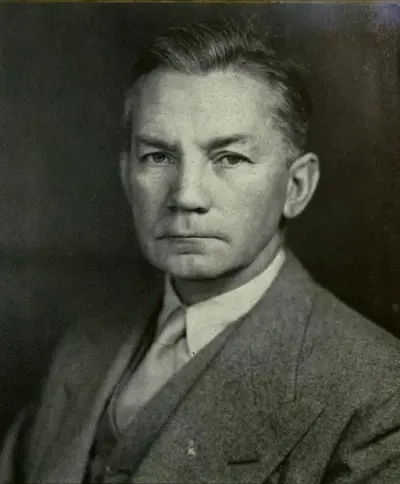
James Vincent Forrestal was the last Cabinet-level United States Secretary of the Navy and the first United States Secretary of Defense.
