Ramsay MacDonald Quotes
If Germany surrendered to the forces of revolution either of the Left or to Right the state of Europe [would be] full of very ominous prospects.
James Ramsay MacDonald, 1866-1937, British Prime Minister (Labor), Cable to Stimson, June 8, 1931
Sourced by: Eigen's Political and Historical Quotations

The leaders and their members were organizing Civil Rights protests and demonstrations in keys Southern communities. The Southern segregationists commonly referred to the protesters with these three terms. Hoover hated the Civil Rights organizations and many of their leaders and would not allow FBI agents to assure the safety of the demonstrators when they were beaten and brutalized by the Southern law enforcement officers and KKK members—often one and the same as Hoover knew ({637608}). He used the same terms describing the demonstrators as the Southerners did reflecting his biases and sympathies.


The condition of most of Europe towards the end of WWII was dire. However, even then it was clear that since there were organized communists (partisans who fought the Nazis during the war) many of them would try and dominate the postwar politics in many counties. This was no surprise to American planners and policy makers.

1st Earl Baldwin of Bewdley. Before the 2nd World War


Elections have been cynically used to divert the anger of the citizens away from the rulers. However in this case, he could not save the monarchy and the Kaiser abdicated.

In 1848 a number of revolutions flared throughout Europe with a call for democracy rather than monarchy. The Prussian king was one of those who really believed that he was selected by God to rule, was very frightened and tried to enlist the Queen and England to present a united front against the revolutionaries. England, which had already had a strong functioning parliament and extensive voting suffrage, protected most of the rights of its citizens and was a Constitutional Monarchy where there were limits to the power of the monarch. Further, Victoria was extremely popular and in many ways was far ahead of the electorate in terms of modern democratic reforms. So she was not in the panic of many of the other crowned heads of Europe were in. Somewhat following the example of England, King William IV allowed a parliament and minimized the strong military role that characterized Prussia. Most of the 1848 revolutions failed to sieze governments but, as with Prussia, forced reforms in what was a long movement to European democracy that would take another 150 years. Note also the logic about religion. Since the revolutionists did not believe in the divine right of kings, they opposed God’s will on earth. Therefore, they opposed God and must be atheists. Almost all counter revolutionary accusations included the claim—often not true—that the revolutionaries were atheists.

Saloth Sar Pol Pot. His view was that any small merchant or tradesman running a business was a capitalist, and all educated were enemies of the people. He moved entire populations out of the cities into the countryside where they would live as peasants or be murdered as about 20% of the entire population as. Therefore, in his warped view, the capitalists could no longer “control” Cambodia.


The letter was widely published. There were few left wing intellectuals who would take Lenin on at the time but Gorter was one. The immediate quotation shredded a brochure that Lenin had produced for world wide communism where he was critical of other left wing movements.


The French Revolution with the rise of Napoleon was a classic example. The American Revolution was an exception.


This is another example where our intelligence analysis was totally wrong. It also shows that intelligence being influenced by ideology and politics has a long history in America as elsewhere.


China, after overthrowing the Manchu Dynasty was struggling among many factions for control of the government.

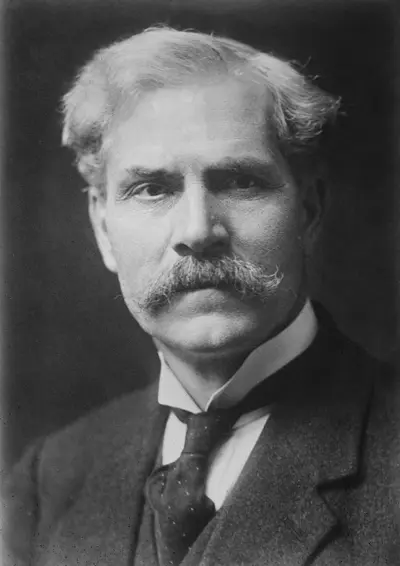
James Ramsay MacDonald FRS was the first Prime Minister of the United Kingdom who belonged to the Labour Party, leading minority Labour governments for nine months in 1924 and again between 1929–1931. From 1931 to 1935, he headed a National Government dominated by the Conservative Party and supported by only a few Labour members. MacDonald was expelled from the Labour Party as a result.
