Max von Baden Quotes
The revolution is on the verge of winning. We cannot crush it but perhaps we can strangle it …. Perhaps it will be possible to divert the revolutionary energies into the legal channels of an election campaign.
Elections have been cynically used to divert the anger of the citizens away from the rulers. However in this case, he could not save the monarchy and the Kaiser abdicated.
Max von Baden, 1867-1929, German Prince & Chancellor, Statement, 1919
Sourced by: Eigen's Political and Historical Quotations

Germany, after its defeat in WWI was going through massive demonstrations and strikes. The government kept issuing bulletins that “Order Prevails” and the like. Luxemburg’s rhetoric and writing was so damaging to the government that they had her assassinated shortly after this statement.

The attempted putsch failed. Hitler was arrested and jailed 4 days later.


The Turkish revolution was by historical standards relatively bloodless as compared especially with other republican revolutions like the United State and France. However, the revolution that brought Ataturk to power was a relatively mild one in terms of the immediate changes that unlike many revolutions which produced instant radical change. In Turkey, the radical change took place in the years after the revolution when Ataturk with hardly any bloodshed produced compulsory public secular education, scientific elevation in society, separation of mosque and state, gender equality including universal voting, change to western dress, elimination of the caliphate, speech and press freedom, and many others including changing the entire language to use the Latin alphabet instead of Arabic. No nation in history has gone thought more social and cultural change and modernized so fast as Turkey after its revolution. The result is the most modern and successful Islamic country in the world.


The Kaiser, facing a revolution, instructed Groener to use the army to put down the revolution. The Kaiser had to abdicate and the German Republic was born, soon to fall to the Nazis.

Harding, not the most historically knowledgeable of American Presidents, had forgotten the revolutionary origin of the United States or its drastically experimental nature. It was the fear of Communism and the Russian Revolution that gave revolution a bad name at the time.


Even the CIA and the other U. S. Intelligence missed predicting the Arab Spring, but so did the intelligence services of all our allies, Russia, China and even Israel which usually has the best intelligence in the Middle East. One of the reasons he argues is that media and technology played such an important role in facilitating the Arab Spring and the intelligence agencies do not really understand the new media world. The people who do some argue are too young to ever be in enough key positions in these agencies to have much influence.


The leaders and their members were organizing Civil Rights protests and demonstrations in keys Southern communities. The Southern segregationists commonly referred to the protesters with these three terms. Hoover hated the Civil Rights organizations and many of their leaders and would not allow FBI agents to assure the safety of the demonstrators when they were beaten and brutalized by the Southern law enforcement officers and KKK members—often one and the same as Hoover knew ({637608}). He used the same terms describing the demonstrators as the Southerners did reflecting his biases and sympathies.


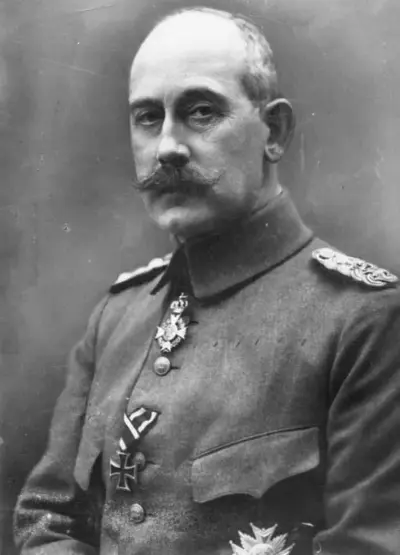
Maximilian, Margrave of Baden, also known as Max von Baden, was a German prince, general, and politician. He was heir presumptive to the throne of the Grand Duchy of Baden, and in October and November 1918 briefly served as Chancellor of the German Empire. He sued for peace on Germany's behalf at the end of World War I based on U.S. President Woodrow Wilson's Fourteen Points, which included immediately transforming the government into a parliamentary system, by handing over the title of chancellor to SPD Chairman Friedrich Ebert and unilaterally proclaiming the abdication of Emperor Wilhelm II. Both events took place on 9 November 1918, the beginning of the Weimar Republic.
