William Tecumseh Sherman Quotes
If any individual belonging to said tribe, or legally incorporated with it, being the head of a family, shall desire to commence farming, he shall have the privilege to select, in the presence and with the assistance of the agent in charge, a tract of land within said reservation, not exceeding one hundred and six acres in extent … the same may be occupied and held in the exclusive possession of the person selecting it, and of his family, so long as he or they may continue to cultivate it
The treaty was signed by a number of people including the Navajo leaders but Sherman or his staff drafted most of it. Sherman also had the title then of Indian Peace Commissioner.
William Tecumseh Sherman, 1820-1891, General of the Army, Article V, Navajo Treaty of 1868, June 1, 1868
Sourced by: Eigen's Political and Historical Quotations

The treaty was signed by a number of people including the Navajo leaders but Sherman or his staff drafted most of it. Sherman also had the title then of Indian Peace Commissioner. This clause, together with Article V, {617991} guaranteed the territorial integrity to into the 21st century. The super majority requirement was key, preventing what happened to many other Indian land holdings which were sold off by individuals or so called chief’s who were not really representing the majority of the tribe.


Essentially whereas many property owners have paid for their ownership in recent times, almost all real estate, wherever it is, that is privately owned was at some time in the past obtained by force, fraud, deceit, from someone else. In most cases, the owners who were killed, defrauded or otherwise removed from their land, had previously killed, defrauded or otherwise removed owners before them. There is almost no guilt untainted land. This was not just a product of capitalism, but has been a factor in every ism that has governed human society.


This was passed in 1787 before the Constitution had become operative, but was then ratified by Congress in 1789. It was one of the first acts of our new nation, and one of the most frequently violated throughout our history.


Withdrawal meant not allowing certain public land to be sold or allotted to homesteading, commercial development, mining, industrial, ranching, or agricultural use. It was reserved as wilderness areas and/or national parks or forests.


This was the basic document issued after the Russian Revolution establishing the basic legal and economic structure of the new Soviet State.

The Romans were very organized regarding land ownership. When they conquered Africa, defeating Carthage, they found no written records of land ownership, no deeds, no bills of sale. Therefore, they opened up the entire land mass of Africa for what amounted to public colonization where the land could be worked and claimed legally. Illiterate Africans had no written records, and most areas where under the control of a strongman who “owned” all of the land with no notion of private ownership of land.

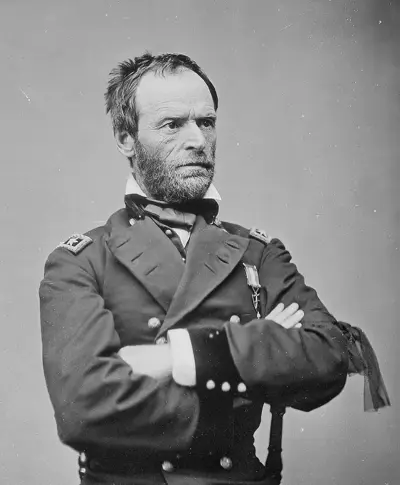
- Born: February 8, 1820
- Died: February 14, 1891
- Nationality: American
- Profession: Soldier
William Tecumseh Sherman was an American soldier, businessman, educator, and author. He served as a general in the Union Army during the American Civil War (1861–1865), receiving recognition for his command of military strategy as well as criticism for the harshness of the scorched earth policies he implemented in conducting total war against the Confederate States. British military theorist and historian B. H. Liddell Hart declared that Sherman was "the first modern general".
