Coretta Scott King Quotes
If American women would increase their voting turnout by ten percent, I think we would see an end to all of the budget cuts in programs benefiting women and children.
King, Coretta Scott. The Words of Coretta Scott King. Newmarket Press, 1999.

Although liberal on many other issues, women voting was anathema to him.


The concept of taxpayers being entitled to vote to avoid taxation without representation was fundamental to the Founding Fathers. However, the only people who paid taxes were those who owned property as there was no income tax at the time. Since the male controlled the family property, not allowing women to vote did no injury to the basic principle. However, the sexist attitude of the times ran up against this basic principles in the case of widows and unmarried women who owned property. Faced with this contradiction, some of the Founding Fathers like Lee actually favored the voting franchise for women who were widows and property owners or even unmarried female property owners. There were not enough people who saw this contradiction so that all women were originally prohibited from voting, but this quotation shows that it was a political issue at the time.


Howe said women should be officially deprived of the ballot because of this reason.

The editorial was in support of women’s suffrage—the right to vote which at the time women did not have in Britain. Women were very active in protests and demonstrations. Tactics sometimes involved civil disobedience and chaining themselves to public buildings. It was the civil disobedience and disruptions that the newspaper referred to as the “follies and excesses.” In retrospect today, it is amazing how threatened the society felt and how they reacted to the “threat” of females voting. It does however give us a perspective on those contemporary societies which restrict women’s voting rights.

Having passed this law, the state legislature turned down subsequent efforts to expand the female voting franchise, and Wisconsin women had to wait until all American women finally got the right to vote.


Although Campaigning in the heart of the conservative Midwest, she had no compunction about advocating women’s suffrage.


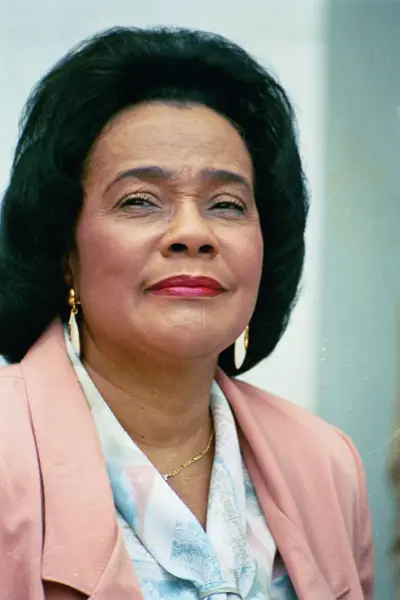
Coretta Scott King was an American author, activist, civil rights leader, and the wife of Martin Luther King Jr. As an advocate for African-American equality, she was a leader for the civil rights movement in the 1960s. King was also a singer who often incorporated music into her civil rights work. King met her husband while attending graduate school in Boston. They both became increasingly active in the American civil rights movement.
