Andrew Jackson Quotes
If a national debt in considered a national blessing, then we can get on by borrowing. But as I believe it is a natural curse, my vow shall be to pay the national debt, to prevent a moneyed aristocracy from growing up around our administration that must bend to its views, and ultimately destroy the liberty of our country.
See {604501} for another of his statements. It was Alexander Hamilton who called the national debt a national blessing. See {207891}. Jackson was convinced that a moneyed class who held the national debt could dictate to any administration by threatening to not renew their bonds. The same concern was expressed at the beginning of the 21st century regarding the Chinese and the Middle Eastern countries which held do many of our bonds.
Andrew Jackson, 1767-1845, 7th President of the United States (Democrat, TN), Letter, July 4, 1824
Sourced by: Eigen's Political and Historical Quotations


Historically, this is the occasion where the war debt from the Revolution and the War of 1812 was paid off. It was one of the few times that the nation was debt free.


Debts accumulated by the allies in World War I was still outstanding a decade later. When it was proposed that the United States help reduce this debt, President Coolidge remarked:


Roosevelt was very candid with the American people that there would be high cost to war and sacrifice would be needed. See {584569} for other similar candor. This quotation was often used by critics of George W. Bush who initiated the Iraq War and then cut taxes for the rich, but then financed the war through the budgetary emergency appropriations bypassing the budget rules that the revenue must be specified to pay for it. His administration even claimed at an early stage in the war that the oil revenue from Iraq oil would defray the costs.

At the time, the George W. Bush Administration policy was to have the United States running a very large trade and budget deficit—the largest in the history of the world. In order to finance the deficit, the U. S. Government had to borrow money and it did so by selling bonds and other financial instruments. Many of these were purchased by Asians, but Paul’s point was that they were “propping up” American spending habits and might not continue to do so.

The problem was that special interests—and Congress—all wanted a piece of the pie, and were unrelenting in their demands on the President to create funded programs for them.

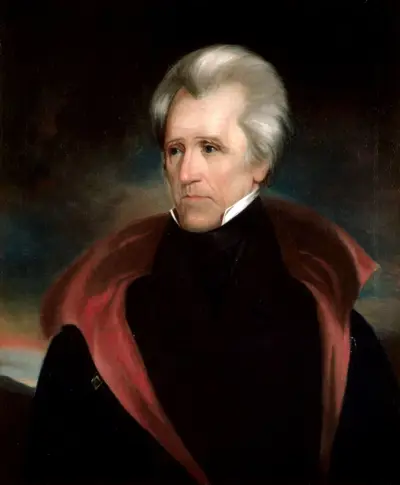
- Born: March 15, 1767
- Died: June 8, 1845
- Nationality: American
- Profession: President
Andrew Jackson was an American lawyer, soldier, and statesman who served as the seventh president of the United States from 1829 to 1837. Before being elected to the presidency, Jackson gained fame as a general in the United States Army and served in both houses of the U.S. Congress. An expansionist president, Jackson sought to advance the rights of the "common man" against a "corrupt aristocracy" and to preserve the Union.
