Curtis LeMay Quotes
I'd like to see a more aggressive attitude on the part of the United States. That doesn't mean launching an immediate preventive war.
LeMay, Curtis E. America is in Danger. Funk & Wagnalls, 1968.


At the time of this speech virtually the entire world believed that. However world attitude changed markedly after the administration of George W. Bush and the United States invasion of Afghanistan after September 11 and the Iraq War which was for regime change.


with Russia over the independence of Berlin and West Germany


He served Presidents Reagan, Clinton, and both Bushes

Nasser was indeed planning an attack. Israeli intelligence had discovered it, and the Israeli’s informed President Lyndon Johnson who in turn called Kosygin. Nasser and the Arabs had miscalculated again and ended up being not only defeated in the war they wanted but totally embarrassed by the incredibly poor performance of the Arab armies who greatly outnumbered the Israelis but had no stomach for a fight.

Actually, the two world wars were wars of necessity. The Korean War and the Vietnam war are considered by many as wars of choice. But most of our military incursions—the Mexican War, the Spanish American War, Grenada, the Serbian War, Hati incursions and many others were wars of choice for which there were often very good reasons. However, we have to go to war when America is existentially threatened. In that sense, the Iraq War which Kerry was primarily addressing, could be interpreted either way. If it was really true thread. That is what caused most members of Congress to vote to approve the war. However, when that turned out to have been untrue, and it was suspected that the weapons of mass destruction was a deliberate ruse by some.

sending American troops to Vietnam

American official foreign policy had been officially isolationist—to not get involved in the squabbles and fights of other nations. Angell however pointed out that even before WWII, America had formally been involved in 6 foreign wars and used military incursions on foreign soil on almost 100 occasions.


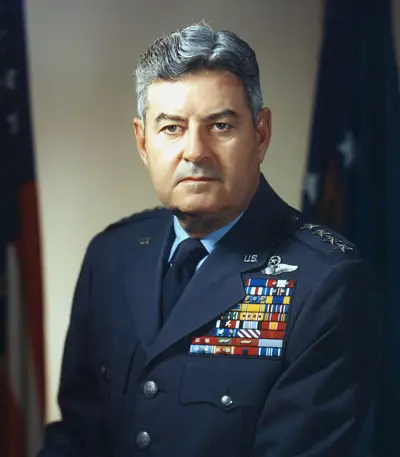
LeMay became a pursuit pilot and, while stationed in Hawaii, became one of the first members of the Air Corps to receive specialized training in aerial navigation. In August 1937, as navigator under pilot and commander Caleb V. Haynes on a Boeing B-17 Flying Fortress, he helped locate the battleship Utah despite being given the wrong coordinates by Navy personnel, in exercises held in misty conditions off California, after which the group of B-17s bombed it with water bombs. For Haynes again, in May 1938 he navigated three B-17s 620 nm (610 miles or 980 km) over the Atlantic Ocean to intercept the Italian liner SS Rex to illustrate the ability of land-based airpower to defend the American coasts. In 1940 he was navigator for Haynes on the prototype Boeing XB-15 heavy bomber, flying a survey from Panama over the Galapagos islands. War brought rapid promotion and increased responsibility.
