Mohammad Javad Zarif Quotes
We've never declared war on anybody. We [Iran] defended ourselves against wars that were imposed on us. We have no desire to engage in confrontation with anybody.
Zarif, Mohammad Javad. Interview by Charlie Rose. Charlie Rose, PBS, 28 Apr. 2015.

Hitler ridiculed the letter after receiving it in public speech.


Actually, the two world wars were wars of necessity. The Korean War and the Vietnam war are considered by many as wars of choice. But most of our military incursions—the Mexican War, the Spanish American War, Grenada, the Serbian War, Hati incursions and many others were wars of choice for which there were often very good reasons. However, we have to go to war when America is existentially threatened. In that sense, the Iraq War which Kerry was primarily addressing, could be interpreted either way. If it was really true thread. That is what caused most members of Congress to vote to approve the war. However, when that turned out to have been untrue, and it was suspected that the weapons of mass destruction was a deliberate ruse by some.

After the attack on Fort Sumter, the South Sent “diplomats” to negotiation with the Government. Unfortunately for all, the South really was not open to negotiations as they only had two predetermined positions they would agree to: The first was that the Government should guarantee the perpetual right of states to have slavery if they wished and that fugitive slaves would be returned by the non-slave states. The second was that the Union should recognize the Confederacy as an independent nation and have peaceful relations between the two. The first was impossible to deliver even if the Union would agree to continue slavery, there was no way that the Federal Government could enforce the return of fugitive slaves from many northern states where they were free the second they set foot in the state, and the Northern states demanded States Rights and not being forced to return Fugitive Slaves forcing the Southern States to oppose States Rights when it came to Fugitive Slaves while favoring it for slavery itself. The Federal government could not enforce the Dred Scott Decision under the pro-South Buchanan administration. And Lincoln and most of the Northern Politicians would not accept a complete dissolution of the Union. There are no other possibilities the South would accept and there was really nothing to negotiate.


Lodge was particularly concerned that under the proposed treaty the United States would be obligated to support the League of Nations military efforts regardless of American public opinion or Congressional action.

Clinton was one of the leaders of the anti-war movement of the day. He even ran for President on the new “Peace Party.” New England, New York and many people in the Atlantic states thought the war of 1812 absurd. In reality, while the law was good for American morale and national pride, the casualties we suffered and the cost was far greater than what we were losing in our dispute with England. In actuality, France (under Napoleon) was offending America and seizing our shipping more than England. Note that Clinton was advocating negotiation even AFTER we would be attacked. This is in a way the complete opposite of the George W. Bush doctrine of preemption—attacking a hostile state BEFORE it has attacked us so as to prevent the casualties of an attack. The Bush doctrine was a great blunder in its only implementation—Iraq did NOT have the weapons of mass destruction that Bush and his administration claimed they had to justify the preemptive war.


Instructing the navy not to act precipitously during the Cuban missile crisis:

For various historical reasons the United States and Iran at that time had no diplomatic relations and there was no easy way for the countries to negotiate their differences. The United States public policy was that Iran would not be allowed to develop a nuclear weapon which was backed up by severe economic sanctions and the threat of military force. Kucinich wanted face to face negotiations and discussions before we resorted to military action.


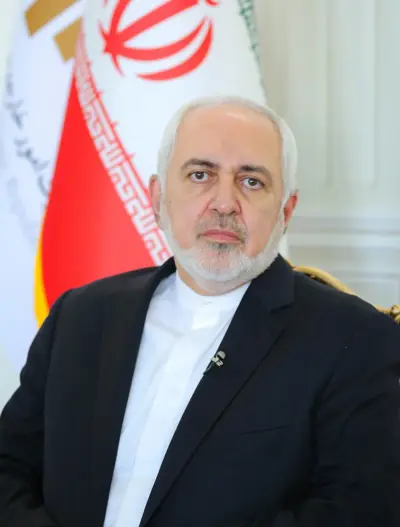
Mohammad Javad Zarif is an Iranian career diplomat and academic. He has been foreign minister of Iran since 2013. During his tenure as foreign minister, he led the Iranian negotiation with P5+1 countries which produced the Joint Comprehensive Plan of Action on 14 July 2015, lifting the economic sanctions against Iran on 16 January 2016. On 25 February 2019, Zarif resigned from his post as foreign minister. His resignation was rejected by President Hassan Rouhani and he continues as foreign minister.
