Peter Handke Quotes
I wrote about the Serbs, because no one was writing about them, even if I also think about the Croat and Muslim victims.
Handke, Peter. Quoted in "Peter Handke Speaks Up for Serbia, and Finds He Needs to Defend Himself" by Alan Riding, The New York Times, 2 Jun. 2006.


He was a brutal, sadistic war criminal who was assassinated by one of his many enemies in 2000 before he could be brought to trial. This statement was typical of his outlook and behavior. He tortured and murdered Croation and Muslim prisoners. His reference to the “slaughterhouse” was to the Second World War in which the Croats were allies of Nazi Germany and created their own concentration and extermination camps where hundreds of thousands of Serbs were murdered. In the eternal memory of the cycle of revenge in the Balkans, Arkan, tried to retaliate against the Croats who had never been called to account for their crimes and even the leadership of Croatia after the Camp David accords celebrated the Fascist times when they were dominant and were able to settle accounts with the Serbs.


Wilson was referring to the Armenian genocide that was being carried out by Turkey. Under the League of Nations treaty then executed, the League would take over Armenia and end the massacres.
The Christian Armenians, a minority in Turkey and its lands, were discriminated against like other non Muslim minorities in the Ottoman Empire. But during the Turkish War with Russia and WWI, some Armenians defected and served on the Russian side. Many Turkish citizens took revenge on Armenians by means of murder and torture. Soon, the extermination of the Armenians became the official “Young Turk” government policy. Hundreds of thousands of Armenians were killed outright, and about an equal number were “deported” to special areas. Many died of malnutrition along the forced march of Ethnic Cleansing. Others were murdered as they were deported. No one knows exactly how many Armenians were killed with estimates ranging from ½ million to 4 million. This was the first genocide of the 20th century. Modern Turkish leaders however, are in denial about the Armenian deaths. They claim that there was a war and food was scarce; the only Armenians killed, the claimed were proven Russian agents. They further claim that the Armenian behavior was in large part responsible for the forced deportations because of their lack of patriotism and unwillingness to help the Turkish authorities identify the Russian agents. Most Turks today are unaware of the Armenian Genocide as nothing is taught about the massacres in schools or other institutions. It is against the law in Turkey to even have an intellectual study of the Turkish behavior towards the Armenians, much less publish anything about it.


The genocide when the Hutu tried to exterminate the Tutsis might have been curtailed with large nation intervention, but that would have interfered in the internal affairs of a sovereign state. Two important principles were in conflict. The rights of the Tutsi minority and the traditional prohibition of interfering in the internal affairs of another country. In this and many situations to follow, ranging from Darfur to Zimbabwe, the realization that the traditional prohibition against internal interference has to trump the most egregious violations of human rights.
The Turkish government used the Kurds to massacre the Armenians


The two groups of Christian minorities in Turkey then were the Greeks and the Armenians. The discrimination against those minorities had been so great that many sought independence for their areas and accepted and gave assistance to Russia and other “enemies” of Turkey. The Turks, instead of distinguishing between those who aided the enemy and those that did not, assumed that all Armenians and Greeks were guilty and began a program of ethnic cleansing and organized murder of the Christians—the Armenians in particular. Unlike Germany, which accepted its guilt for the Holocaust and organized their society to prevent anything like that from ever happening again, the Turks deny the Armenian Genocide and despite clear historical evidence to the contrary, claim that the Armenian deaths were “collateral damage” resulting from the war. This quotation is poignant in that by the time, the Western powers seriously challenged the Armenian genocide, most of the Armenians had been exterminated as Talat admitted.

At the time hundreds of thousands of Armenians were being massacred by the Turks. Some atrocities were spontaneous, many were committed under orders, and many were triggered by Turkish leaders who whipped up the resentment and hate for the non-Muslim Armenians and then forced unarmed Armenians into areas where the Muslim Turks themselves were short of food and supplies. See {626835} for one of the several admissions of the intended genocide.
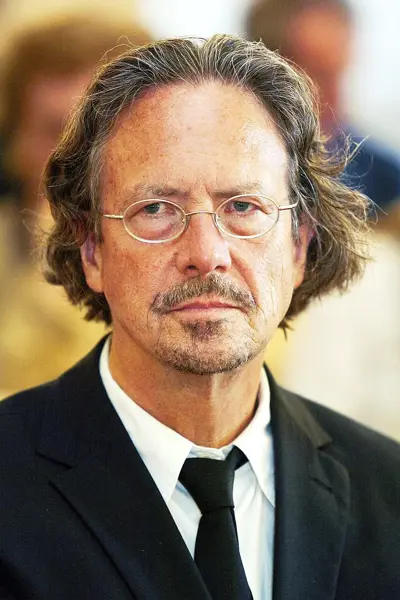
Peter Handke is a Nobel laureate novelist, playwright, translator, poet, film director, and screenwriter from Austria. Handke was awarded the Nobel Prize in Literature in 2019. The decision to award Handke a Nobel Prize was denounced internationally by a variety of public and academic intellectuals, writers, and journalists, who cited his support of the late Slobodan Milošević and Bosnian genocide denial.
