Henry A. Grunwald Quotes
The new history is really ancient history newly discovered. Journalists are taking crash courses in the blood-drenched background of Serbs, Croats, Bosnians, North Ossetians, Armenians and Azerbaijanis.
Grunwald, Henry A. "The Post-Cold War Press: A New World Needs a New Journalism." Foreign Affairs, vol. 72, no. 3, 1993, pp. 12-16.


He was a brutal, sadistic war criminal who was assassinated by one of his many enemies in 2000 before he could be brought to trial. This statement was typical of his outlook and behavior. He tortured and murdered Croation and Muslim prisoners. His reference to the “slaughterhouse” was to the Second World War in which the Croats were allies of Nazi Germany and created their own concentration and extermination camps where hundreds of thousands of Serbs were murdered. In the eternal memory of the cycle of revenge in the Balkans, Arkan, tried to retaliate against the Croats who had never been called to account for their crimes and even the leadership of Croatia after the Camp David accords celebrated the Fascist times when they were dominant and were able to settle accounts with the Serbs.

Many of the Kurdish people want an independent state—Kurdistan—of their own. There are large concentrations of Kurds in Turkey, Iraq, and Iran. The Arabs who have a number of independent states in the Middle East came to the area well after the Kurds, but in the vicissitudes of history, the Kurds have not ended up with a country of their own.
The Turkish government used the Kurds to massacre the Armenians


Armenian dissidents in Turkey formed military units like Hinchak which during the First World War, attacked unarmed Turkish Muslim Villages behind the front lines. The object of the Armenians was to have turkey lose the war and obtain their own ethnic state afterwards. The atrocities committed by the Armenians were unfortunately matched by the Turks in what is now referred to as the “Armenian Genocide”. The hatred still prevails – see {588211}.
Whenever different ethnicities perceive that they are in a “zero sum game” situation where one group cannot benefit without detriment to others, the situation is always unstable and usually explodes as when Yugoslavia broke apart at the end of the 20th century after being held together by a strong leader, Tito. Note that there was a different spelling of Yugoslavia in the 1920s. The pronunciation was the same.


Most of the Roman Catholic Clergy in Yugoslavia did not oppose the Nazis in WWII. Many in Croatia actually supported the Concentration Camp that the Croat Military Allies of Germany ran, The only major difference between that concentration camp and the Nazi run camps were that instead of murdering Jews en masse, the Croats murdered Serbs en masse. The Bishops were silent. After the Nazis were defeated, the Catholic Bishops attacked the pro Communist Yugoslav government run by Tito. To Tito the hypocrisy was palpable.


The Christian Armenians, a minority in Turkey and its lands, were discriminated against like other non Muslim minorities in the Ottoman Empire. But during the Turkish War with Russia and WWI, some Armenians defected and served on the Russian side. Many Turkish citizens took revenge on Armenians by means of murder and torture. Soon, the extermination of the Armenians became the official “Young Turk” government policy. Hundreds of thousands of Armenians were killed outright, and about an equal number were “deported” to special areas. Many died of malnutrition along the forced march of Ethnic Cleansing. Others were murdered as they were deported. No one knows exactly how many Armenians were killed with estimates ranging from ½ million to 4 million. This was the first genocide of the 20th century. Modern Turkish leaders however, are in denial about the Armenian deaths. They claim that there was a war and food was scarce; the only Armenians killed, the claimed were proven Russian agents. They further claim that the Armenian behavior was in large part responsible for the forced deportations because of their lack of patriotism and unwillingness to help the Turkish authorities identify the Russian agents. Most Turks today are unaware of the Armenian Genocide as nothing is taught about the massacres in schools or other institutions. It is against the law in Turkey to even have an intellectual study of the Turkish behavior towards the Armenians, much less publish anything about it.

Turkey, even a century later, takes great offense at the terms “holocaust” or “genocide” to describe the death of so many Armenians. The censor newspapers and jail academics who even want to have conferences to study the question. This is in great contrast to Germany which faced its genocidal killings squarely and built a society and government structure to never forget it and always focus on preventing a reoccurrence,


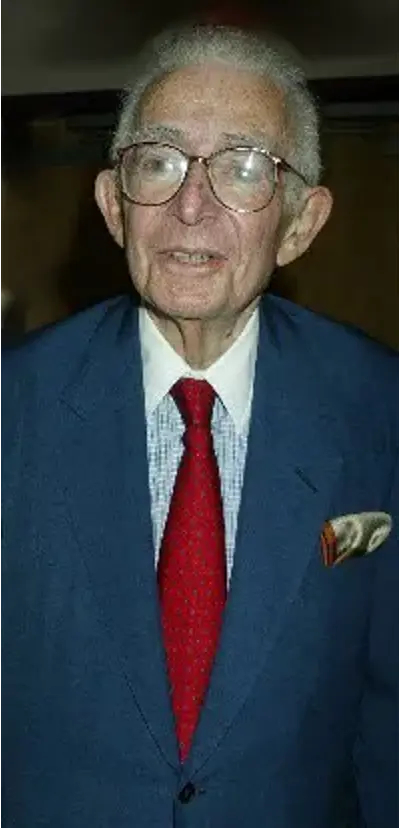
Henry Anatole Grunwald was an Austrian-born American journalist and diplomat. He was best known for his position as managing editor of TIME magazine and editor in chief of Time, Inc.
